
Aronnyok | Mukti Guest House | A Sustainable Bamboo Architecture Haven in the Sundarbans
- April 21, 2026
- By: Syed Md. Ehteshamul Hasan
- INFLUENCERS
Built with locally sourced materials and shaped by community craftsmanship, this elevated retreat by QX Design of Kolkata demonstrates how climate-responsive architecture can serve both hospitality and resilience in one of India’s most fragile ecological regions.
.webp)
Cradled within the vast deltaic landscape of the Sundarbans, nearly 90 kilometres south of Kolkata, Aronnyok | Mukti Guest House stands as a sensitive response to place, climate, and community. More than a retreat, it is a living example of bamboo architecture in India, where material intelligence and environmental empathy come together in a meaningful built form.
Crafted using bamboo, brick, cane, timber, and lime finishes, the project embraces eco-friendly building materials while drawing from local building traditions. Designed on the two-acre campus of NGO Mukti by QX Design of Kolkata, led by Ar. Udit Mittal, the guest house offers an immersive model of sustainable hospitality design in India—one that welcomes eco-tourists, wellness travellers, and visitors seeking a slower, more grounded connection with nature.
A Retreat Rooted in Landscape and Purpose
The Sundarbans is one of the world’s most ecologically significant and climatically vulnerable regions. Frequent tidal surges, rising water levels, and recurring cyclones have shaped how people live and build here for generations. Any architecture in this context must do more than look good—it must perform.
.webp)
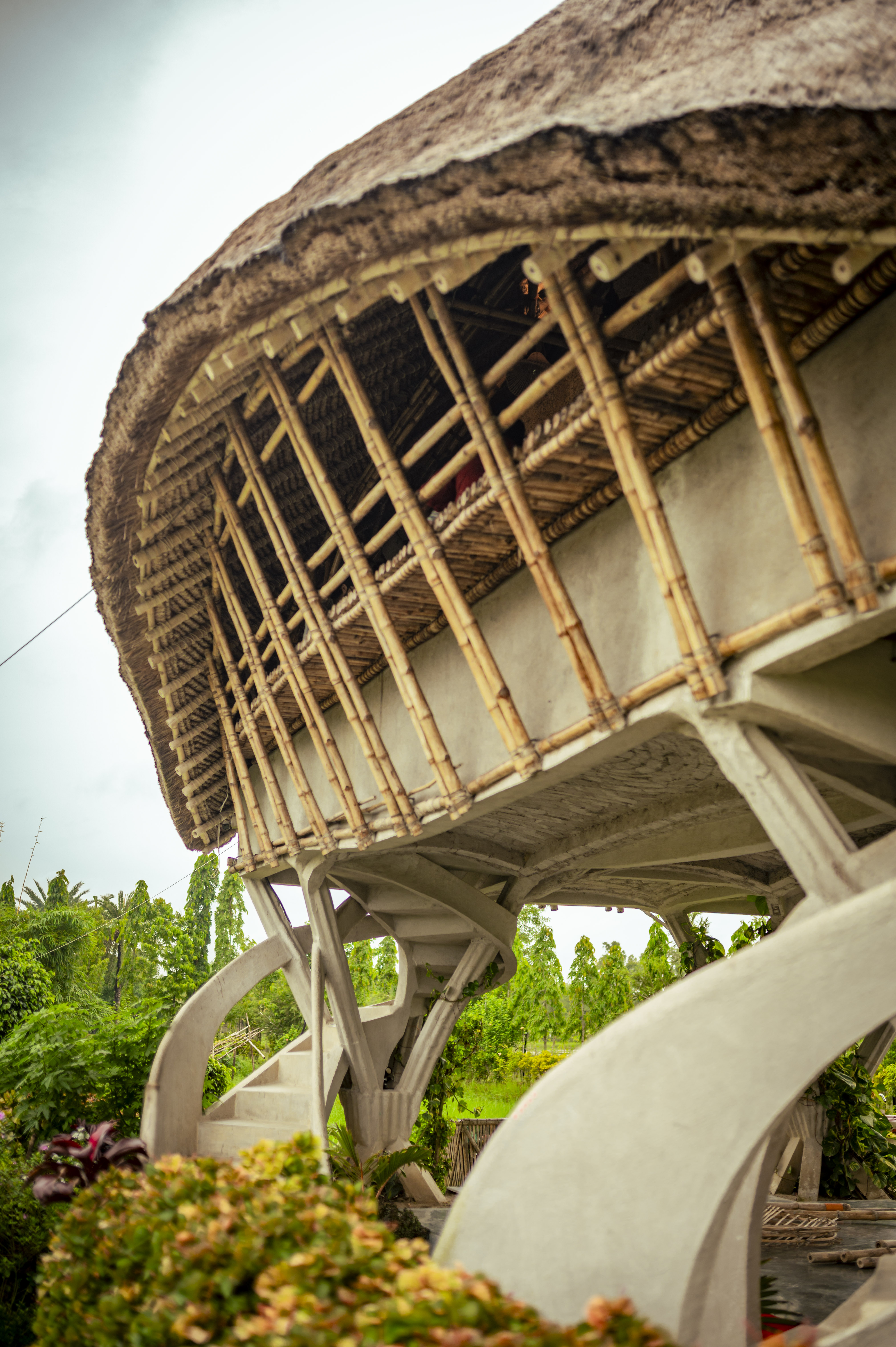
Aronnyok responds to this challenge with humility and intelligence. Conceived as an elevated two-room cottage, the structure references the familiar language of traditional Bengali hut architecture, reinterpreted through contemporary sustainability principles. Its pitched roof, shaded verandah, compact footprint, and breathable materials all align with the rhythms of the local environment. The result is architecture that does not impose itself on the land, but belongs to it.
Bamboo Architecture in India: Why the Material Matters?
At the heart of Aronnyok lies bamboo—a material increasingly central to conversations around low-impact construction. This project showcases why bamboo architecture India deserves renewed attention.
Bamboo offers:
- High tensile strength
- Natural flexibility during high wind conditions
- Rapid renewability compared to timber
- Lower embodied carbon than steel or concrete
- Local availability and craft familiarity
In a region like the Sundarbans, bamboo is not only sustainable—it is practical. Its lightweight nature reduces structural load, while its flexibility allows it to absorb movement caused by wind and moisture shifts more effectively than rigid materials.
.webp)
At Aronnyok, bamboo is used structurally and aesthetically, allowing the guest house to feel warm, tactile, and deeply connected to its setting.
Cyclone-Resilient Architecture: Building for Survival
The Sundarbans has repeatedly faced devastating cyclones, including Amphan in 2020 and Yaas in 2021. In such conditions, conventional ground-level structures are highly vulnerable. Aronnyok addresses this reality through a thoughtful model of cyclone-resilient architecture in India.
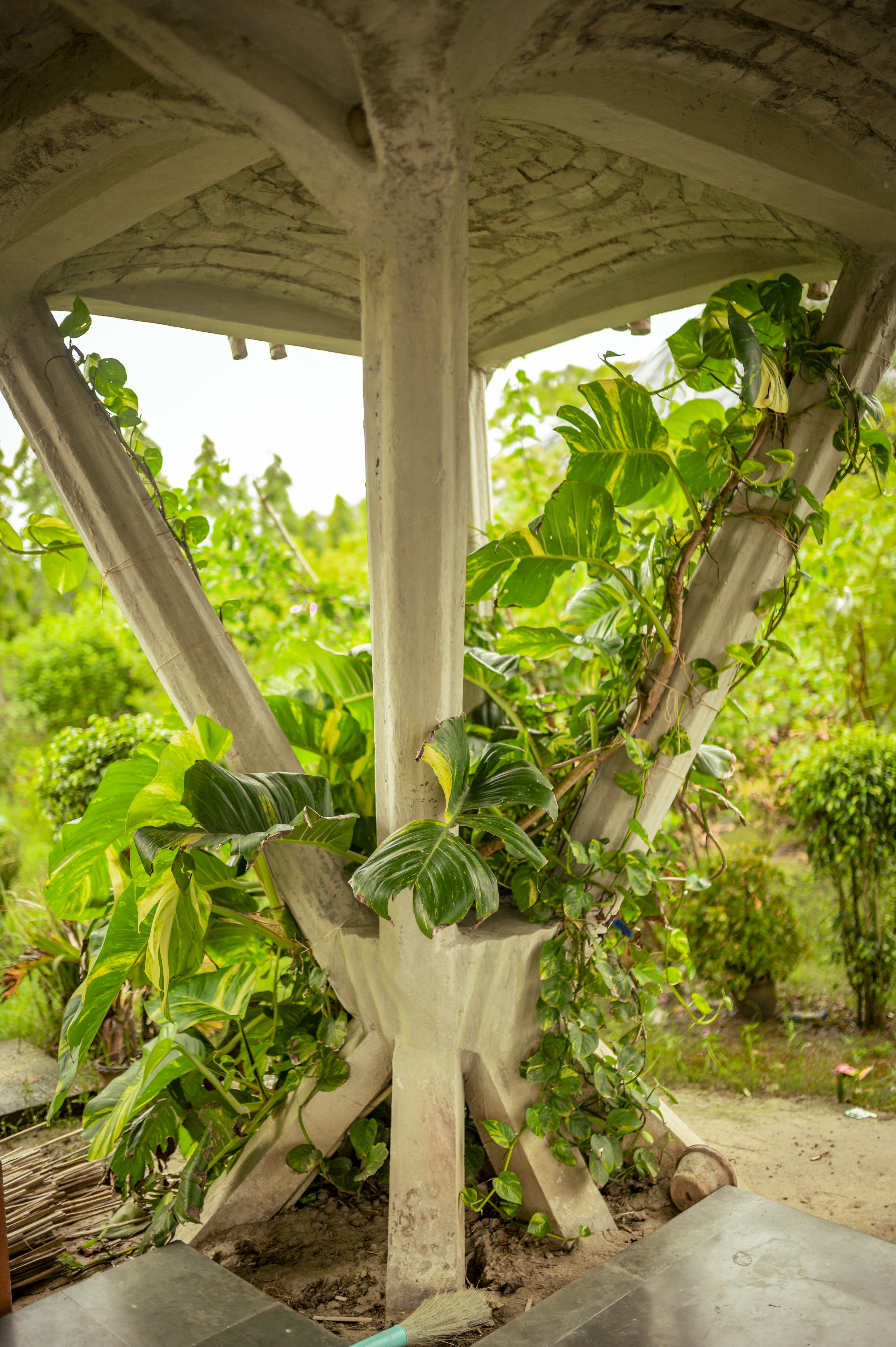
The guest house is elevated above ground level, creating a highly effective elevated stilt house design that allows floodwaters to pass below the structure during extreme weather events. This also protects the primary living spaces from moisture damage and tidal inundation.
Importantly, the building is not only a guest retreat. During emergencies, it can function as a community shelter accommodating up to 100 people—demonstrating how good design can serve social resilience alongside hospitality.
This makes Aronnyok a rare example where architecture responds equally to tourism, ecology, and humanitarian need.
Flood-Proof Bamboo Structure with Vernacular Intelligence
Aronnyok’s planning reveals the power of vernacular wisdom. Its raised platform, broad roof overhangs, cross ventilation, and shaded verandah all derive from long-standing regional responses to heat, rain, and humidity.
.webp)
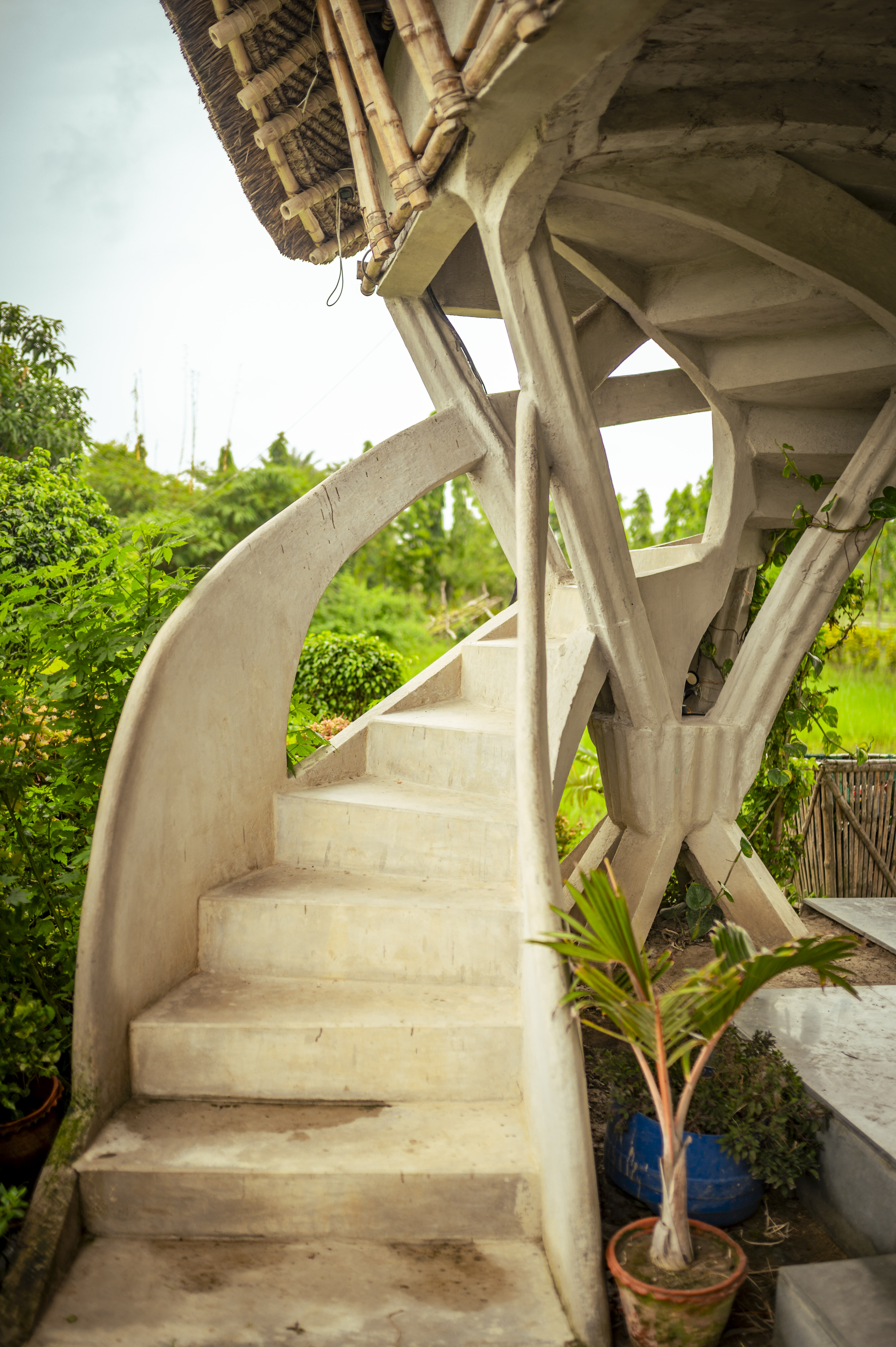
As a flood-proof bamboo structure, the project uses elevation not as a stylistic gesture but as an environmental strategy. Staircases on both sides improve accessibility, while the verandah acts as a transitional social zone between indoors and outdoors.
The two-room arrangement is efficient, modest, and adaptable—qualities often overlooked in modern luxury hospitality.
This is where the vernacular architecture of West Bengal becomes especially relevant. Rather than romanticising tradition, Aronnyok updates it for contemporary use.
Interiors & Sustainable Hospitality Design in India
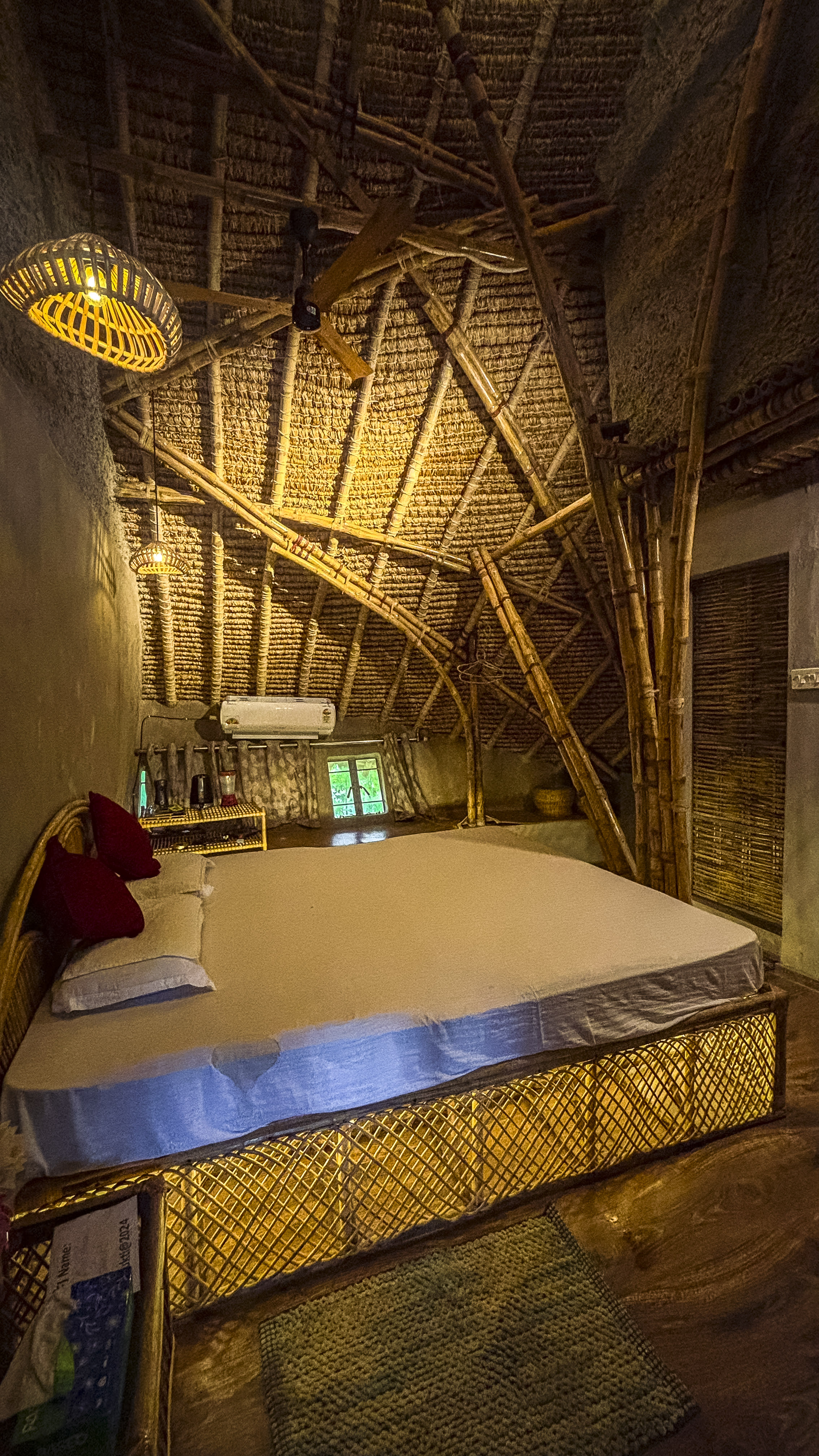
Step inside, and the interiors continue the same philosophy of restraint and authenticity. There is no excess, no decorative clutter—only warmth, craft, and comfort. Natural timber flooring, woven bamboo ceiling panels, exposed rafters, and handcrafted furniture create an atmosphere that feels intimate and restorative. The rooms are equipped with essential comforts including queen-sized beds, side tables, shelving, lighting, and ceiling fans—enough to ensure convenience without disconnecting guests from the simplicity of the place.
This understated language positions Aronnyok firmly within sustainable hospitality design in India, where experience is shaped by atmosphere rather than opulence. The seating plinth within the room is another thoughtful gesture. It evokes domestic familiarity, encourages slower living, and adds a sense of rootedness often absent in generic hospitality interiors.
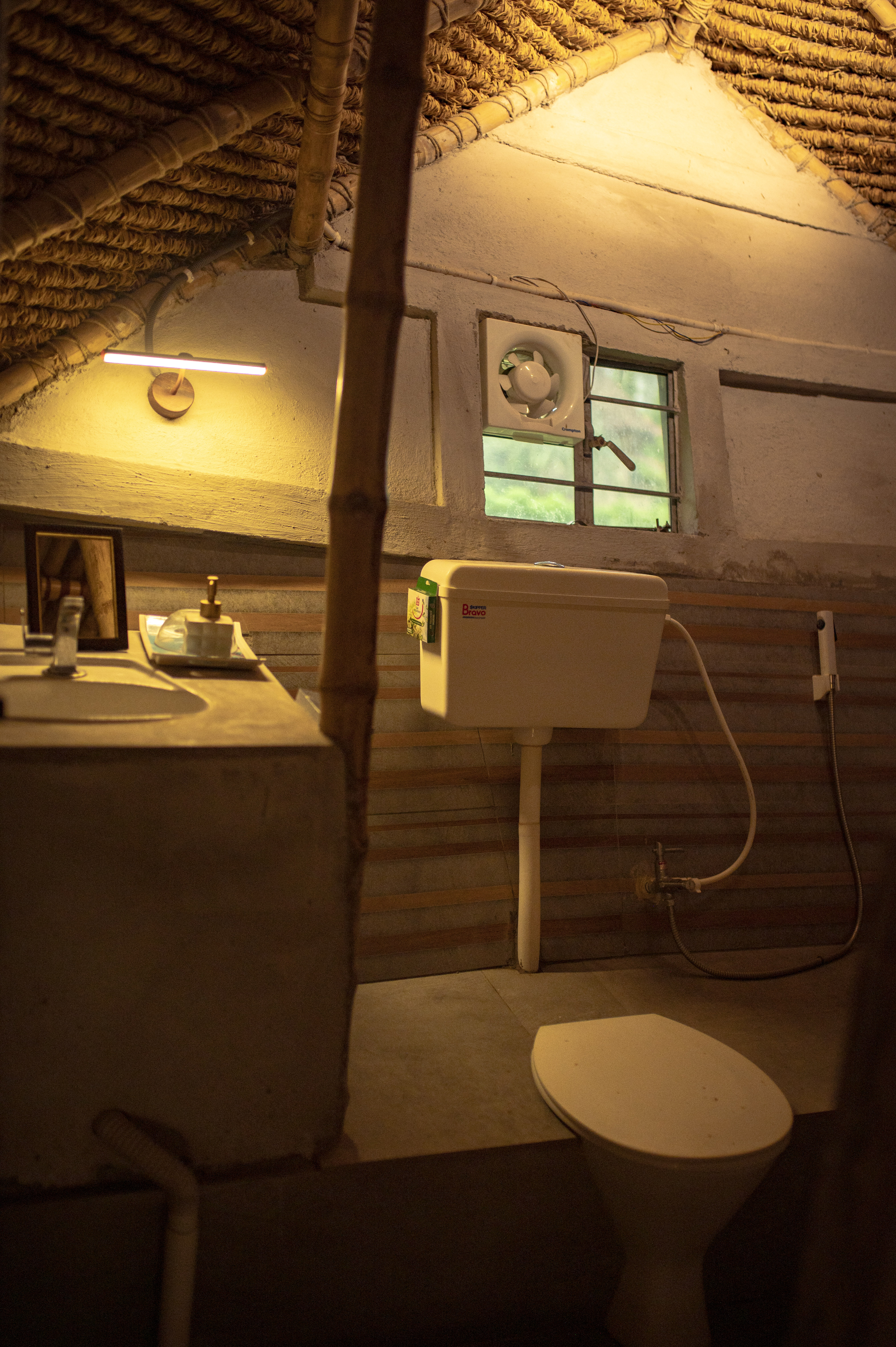
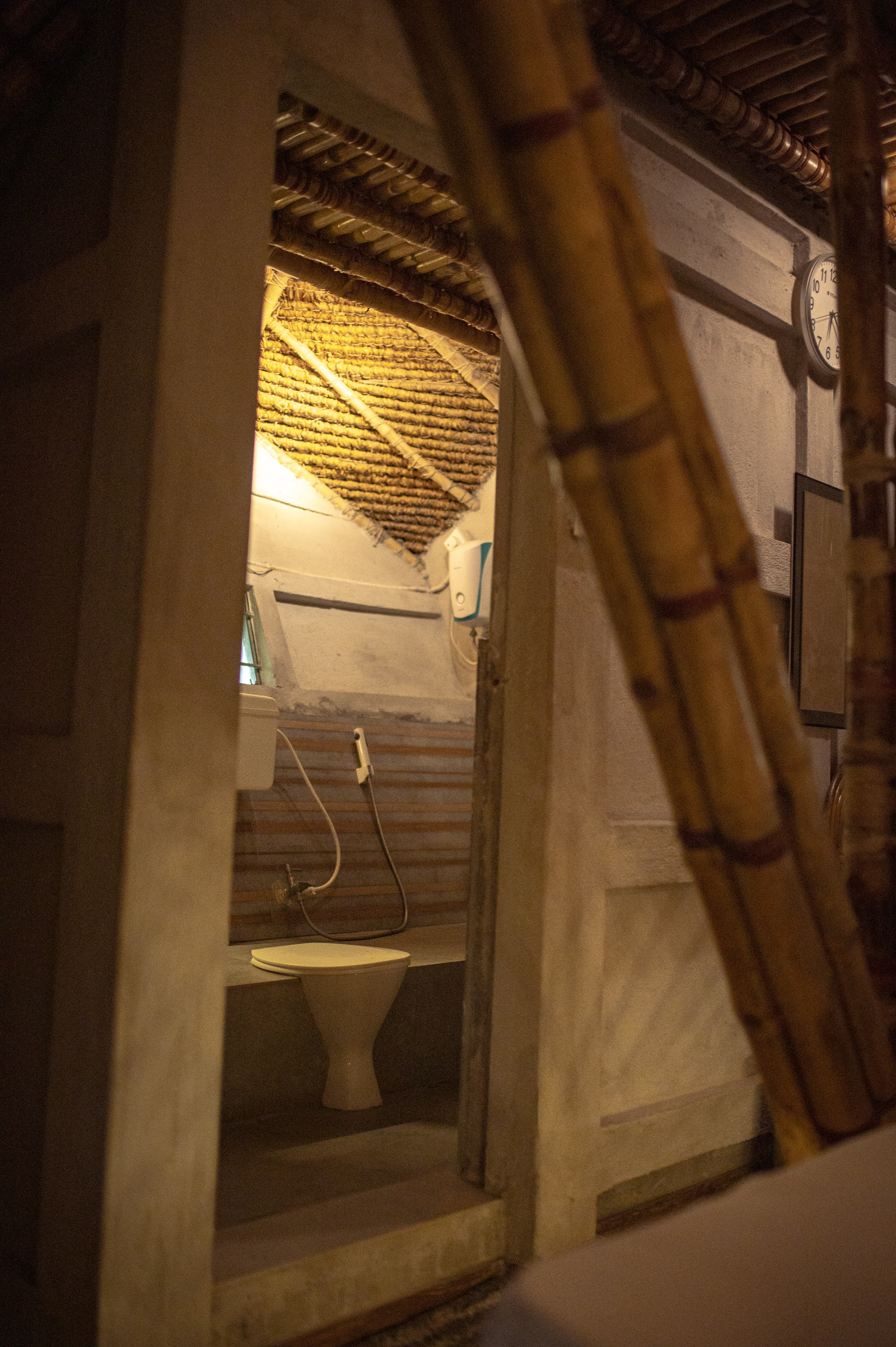
Small windows ensure ventilation, while attached bathrooms add practical comfort for guests seeking an eco-conscious stay.
Lime Plaster Walls Architecture: A Material of Breathability
One of the most important material choices in the project is the use of lime finishes. The warm-toned surfaces reflect the growing relevance of lime plaster walls architecture in climate-sensitive design.
Unlike cement plaster, lime is breathable. It allows trapped moisture to escape—an important advantage in humid coastal regions like the Sundarbans. It also helps regulate indoor temperatures naturally and develops a rich patina over time.
.webp) At Aronnyok, lime plaster contributes both performance and atmosphere. The walls feel soft, textured, and handcrafted—enhancing the tactile honesty of the interiors. Combined with bamboo and timber, the palette creates a calm sensory experience rooted in natural materials.
At Aronnyok, lime plaster contributes both performance and atmosphere. The walls feel soft, textured, and handcrafted—enhancing the tactile honesty of the interiors. Combined with bamboo and timber, the palette creates a calm sensory experience rooted in natural materials.
Design Philosophy: QX Design and the Right Questions
For QX Design of Kolkata, sustainability is not a checklist—it is a method of inquiry. Led by Ar. Udit Mittal, the studio believes in asking the right questions before rushing toward standard solutions. Instead of importing fashionable technologies, the practice works closely with site realities, local labour networks, climate conditions, and available resources.
This mindset is evident throughout Aronnyok. Local bamboo weavers, lime plaster artisans, and craftspeople were involved through every stage of construction. Their skills were not supplementary—they were central.
.webp)
This collaborative process reinforces the continuing relevance of vernacular architecture of West Bengal, proving that traditional knowledge systems still hold answers for contemporary challenges.
Why Aronnyok Matters Today?
As hospitality projects across India increasingly chase spectacle, Aronnyok offers something more valuable: sincerity. It shows that eco-friendly building materials that are available in India can create spaces of beauty and dignity. It proves that resilience can be elegant. And it reminds the industry that architecture becomes meaningful when it responds to people and place. For travellers, it is a retreat. For architects, it is a lesson. For communities, it is infrastructure with empathy.
Conclusion
Aronnyok | Mukti Guest House is more than an eco-retreat—it is a blueprint for responsible regional design. Through cyclone-resilient bamboo architecture, and the enduring wisdom of vernacular architecture of West Bengal, the project offers a future-facing model rooted in local intelligence.

In an age of generic development, Aronnyok reminds us that sustainability is most powerful when it grows from the ground it stands on.
FAQs
1. What makes bamboo a suitable building material for cyclone-prone areas like the Sundarbans?
Bamboo has high tensile strength and natural flexibility, allowing it to absorb wind forces more effectively than rigid materials. When treated correctly, it performs well in humid coastal climates, making it ideal for bamboo architecture in India.
2. Why is the Aronnyok Mukti Guest House built on an elevated platform?
The raised structure protects the building from flooding and storm surges. This elevated stilt house design also enables the guest house to function as an emergency shelter during cyclones.
3. What is lime plaster and why is it preferred over cement plaster in eco-architecture?
Lime plaster is breathable, lower in embodied carbon, and helps prevent dampness in humid regions. Its use in lime plaster walls architecture makes it both functional and visually warm.
4. How does QX Design approach sustainable architecture differently from conventional practices?
Kolkata-based QX Design focuses on site-specific responses, local materials, artisan participation, and climate logic rather than superficial green gestures.
5. What traditional Bengali architectural elements are referenced in Aronnyok?
The project references traditional Bengali hut architecture through its elevated floor, verandah, pitched roof, woven ceilings, and simple spatial planning.
6. Can bamboo buildings withstand long-term use in tropical, high-humidity environments?
Yes. Properly treated bamboo can last decades when protected from direct ground moisture and detailed carefully—as demonstrated by this flood-proof bamboo structure approach.