
Chakrajeevan Udyan: Designing Safety, Sustainability, and Social Cohesion in Ahmedabad
- June 25, 2026
- By: Editorial Team
- INFLUENCERS
In the evolving narrative of India’s urban public spaces, Chakrajeevan Udyaan in Ahmedabad emerges as a compelling example of how thoughtful design can reshape behaviour, perception, and community ownership. Designed by Ar. Hiloni Sutaria of Ahmedabad-based HSC Designs, this 40,000 sqft landscape project moves beyond conventional park planning to address deeper concerns of inclusivity, safety, and ecological responsibility—proving that urban design, when rooted in empathy and context, can transform not just space, but social experience itself.
Listening to the Site: A Design Rooted in Observation
Every meaningful project begins with understanding, and Chakrajeevan Udyan is no exception. The design process was driven by an intensive study of the site—analysing climate, mapping sun paths and wind directions, and closely observing patterns of human interaction.
What surfaced was a critical insight: women, children, and senior citizens felt unsafe within the park’s earlier configuration. This discomfort limited their engagement, subtly excluding them from a space meant for all.
The response was clear and decisive. The design intent shifted towards creating a landscape that prioritises these users first, while remaining inclusive for everyone. Three guiding principles—safety, legibility, and accessibility—became the foundation of every spatial decision.
Spatial Clarity: Designing for Visibility and Ease
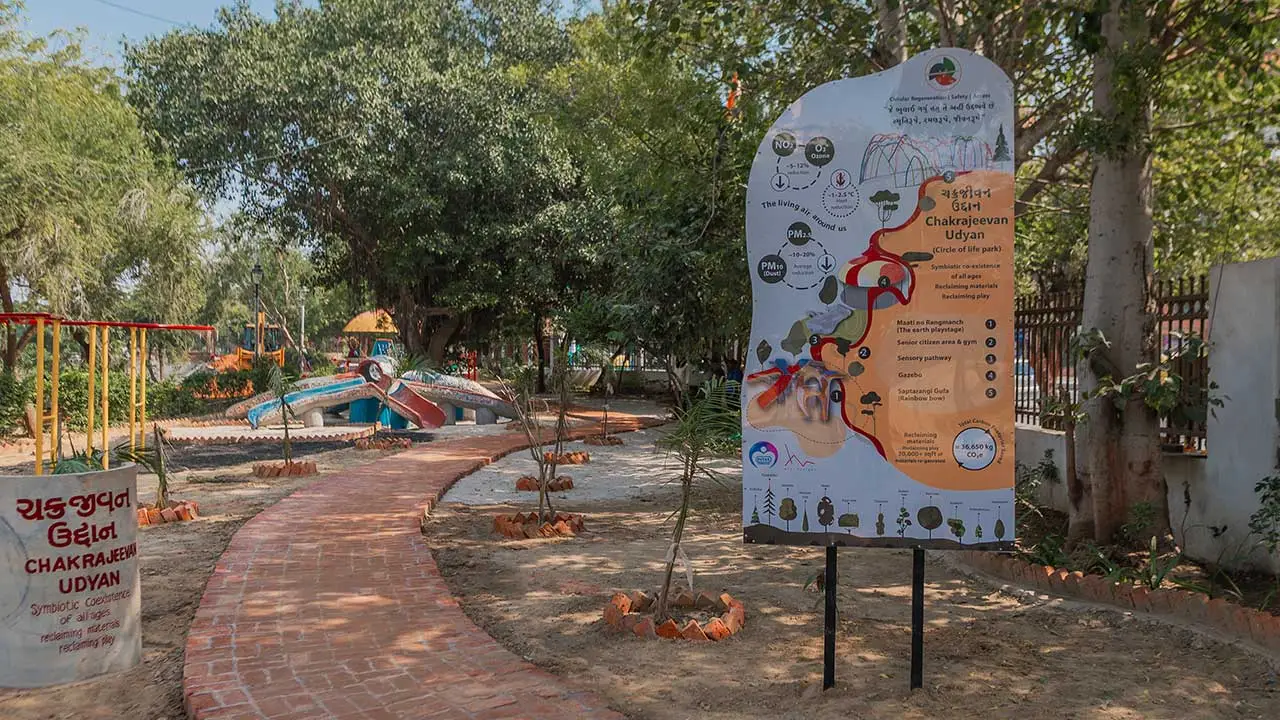
At the heart of the park lies a continuous, gently meandering pathway that acts as a unifying spine. This pathway seamlessly connects a series of clearly defined activity zones or “rooms,” each distinct yet visually interconnected.
Children’s play areas are thoughtfully positioned adjacent to senior citizen zones, encouraging intergenerational interaction. Between them, seating pockets cater to caregivers, teenagers, and independent visitors, ensuring that every demographic finds its place.
A deliberate emphasis on open sightlines ensures that users feel secure. Parents can easily monitor children, while children retain visual access to their families. The absence of hidden corners, deep recesses, or ambiguous spaces discourages misuse and enhances psychological comfort.
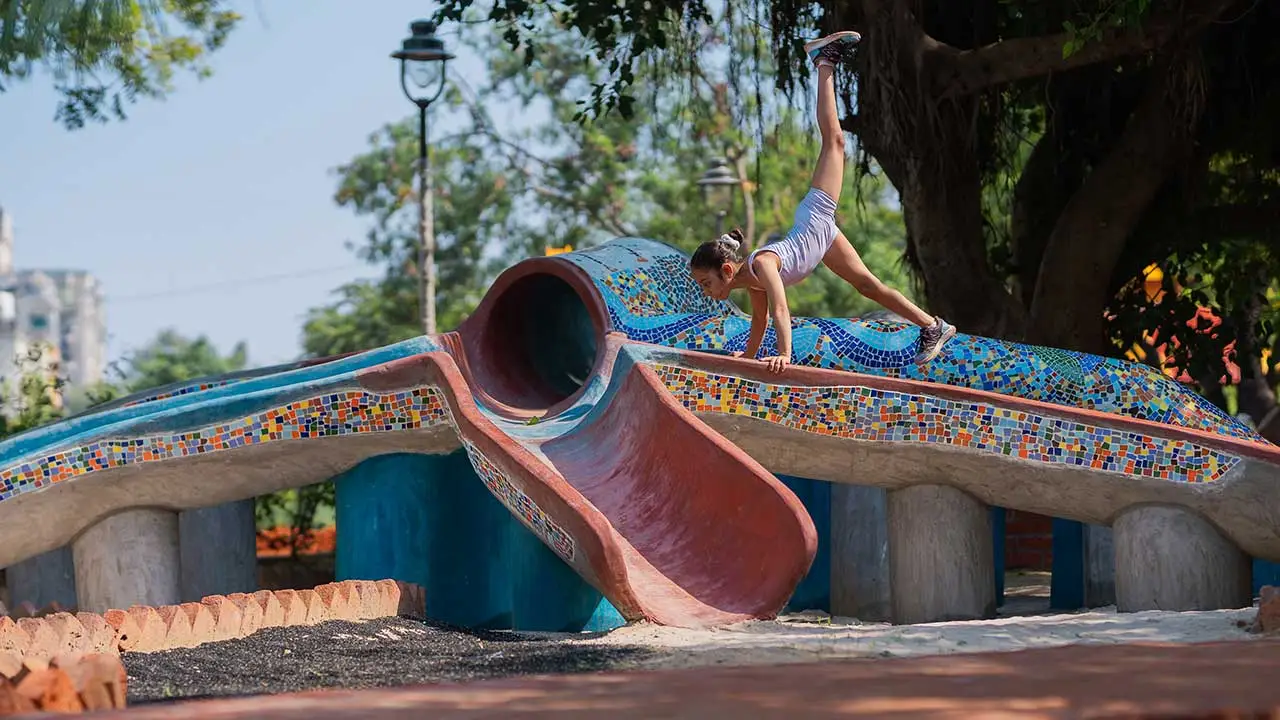
Edges are softened, transitions are clearly articulated, and the network of pathways reads intuitively—even for a first-time visitor. The result is a landscape that invites wandering while subtly regulating behaviour through its clarity.
Material Intelligence: Sustainability as Structure, Not Surface
Sustainability in Chakrajeevan Udyan is not an add-on—it is embedded within the very fabric of the project. Over 30,000 sqft of materials have been reused and repurposed, sourced locally to minimise environmental impact.
Discarded concrete pipes have been transformed into climbable rings and shaded portals that double as spatial thresholds. Mild steel rods are welded into trellises and lightweight frameworks that support climbers and create shaded pockets. Salvaged tiles form textured, durable pathways, while repurposed tyres and reclaimed timber evolve into seating and playful inserts that encourage informal gathering.
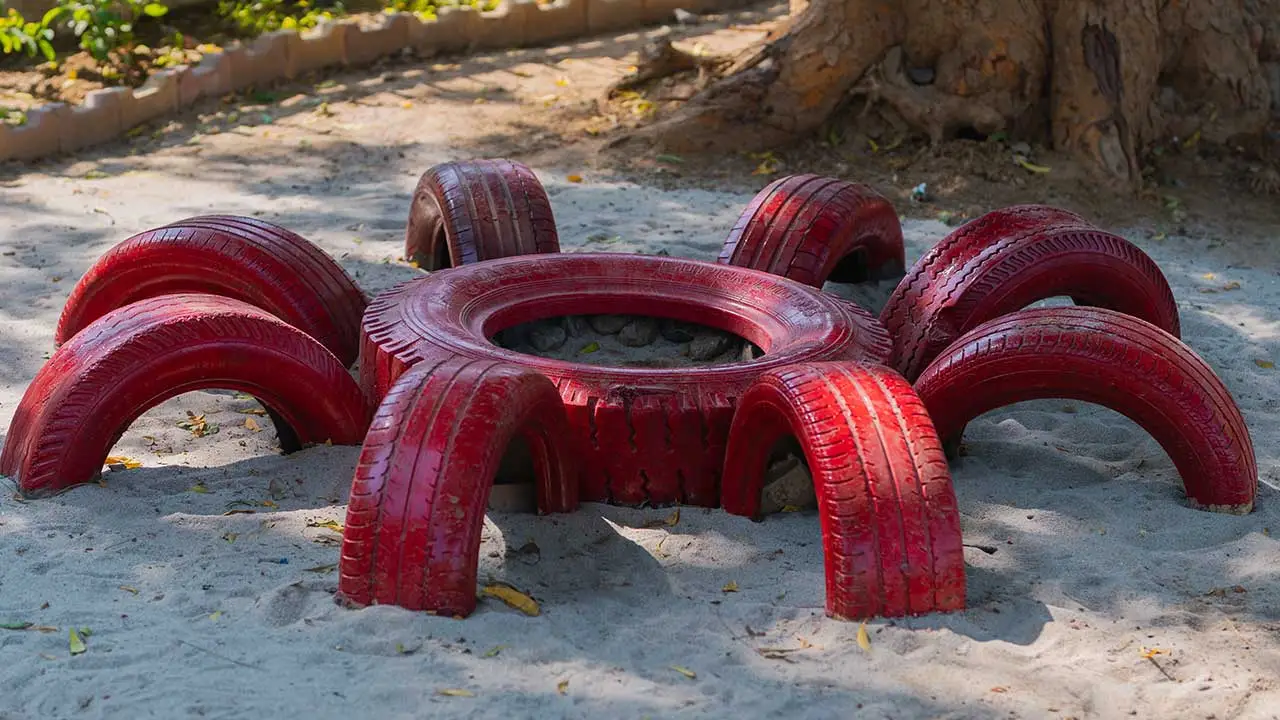
These interventions are not decorative gestures; they constitute the structure and surface of the park itself—bringing the idea of circular regeneration into everyday public life.
Measuring Impact: Environmental Responsibility in Numbers
The environmental implications of this approach are both tangible and significant. By prioritising reuse over new material extraction, the project avoids approximately 36 tonnes of carbon dioxide emissions.
To translate this into everyday understanding:
- Equivalent to cultivating nearly 1,700 trees over ten years
- Comparable to avoiding around 1,50,000 kilometres of car travel
- Matches the annual electricity consumption of about 25 Indian homes
- Similar to emissions avoided by eliminating roughly 81 domestic flights
These comparisons make sustainability visible and relatable, reinforcing the idea that design decisions have measurable consequences beyond aesthetics.
Material Expression: Celebrating the Local and the Real
The park’s material palette is proudly contextual. Instead of concealing imperfections, the design reveals the inherent character of each material.
Fired tiles age gracefully under the sun, deepening in tone. Mild steel develops a warm patina, protected where required through careful detailing. Concrete retains the imprint of its casting, while timber seating reflects the marks of everyday use—signs of interaction rather than wear.
Craftsmanship plays a crucial role. Welds are clean and continuous, edges at grip points are softened for comfort, and drainage details—such as weep holes and channels—are integrated discreetly. Joints remain accessible for inspection and repair, ensuring that durability is paired with long-term maintainability.
Human-Centred Design: Comfort Across Generations
Anthropometric precision guides the design of every element. Heights, reaches, footholds, and seating dimensions are calibrated to support both children and elderly users.
Senior seating incorporates backrests and arm supports, offering ease during sitting and standing. Shade is not incidental but carefully studied, ensuring comfort during peak hours. Pathways are designed to accommodate wheelchairs and prams without friction, allowing movement with dignity.
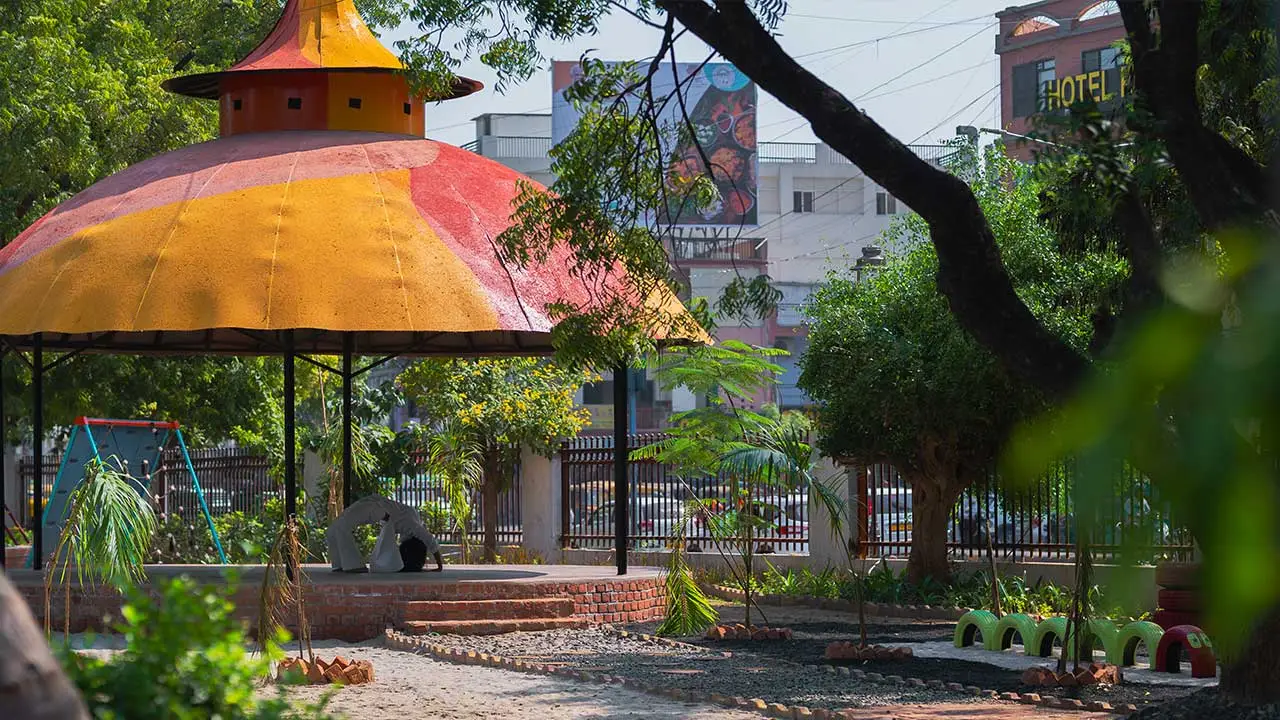
Wayfinding is intuitive—embedded within the geometry of the layout rather than imposed through excessive signage. The space itself becomes the guide.
Designing Behaviour: Architecture as a Social Catalyst
Rather than responding defensively to vandalism or misuse, the project adopts a proactive approach—designing conditions that encourage positive behaviour.
Visibility is key. Open sightlines enable natural social surveillance, where the presence of many users discourages misconduct. Shared thresholds foster interaction instead of isolation, avoiding the pitfalls of fragmented or hidden zones.
Material expression also plays a role. When spaces appear cared for—robust, well-crafted, and thoughtfully detailed—users are more likely to treat them with respect. The project demonstrates that form can shape behaviour as effectively as rules.
A Living Landscape: Movement, Adaptability, and Care
Chakrajeevan Udyan operates as a dynamic, living organism. Its looping pathways collect and distribute movement fluidly, while its spatial “rooms” expand and contract with daily rhythms of activity. Surfaces invite touch and tolerate wear, and planting strategies filter dust while softening edges without compromising visibility.
Maintenance is embedded within the design logic. Trellises can be unbolted in segments, tile surfaces lifted and relaid in parts, and fasteners remain accessible for easy repair. This approach prioritises care over replacement, extending the life cycle of materials while reducing long-term costs.
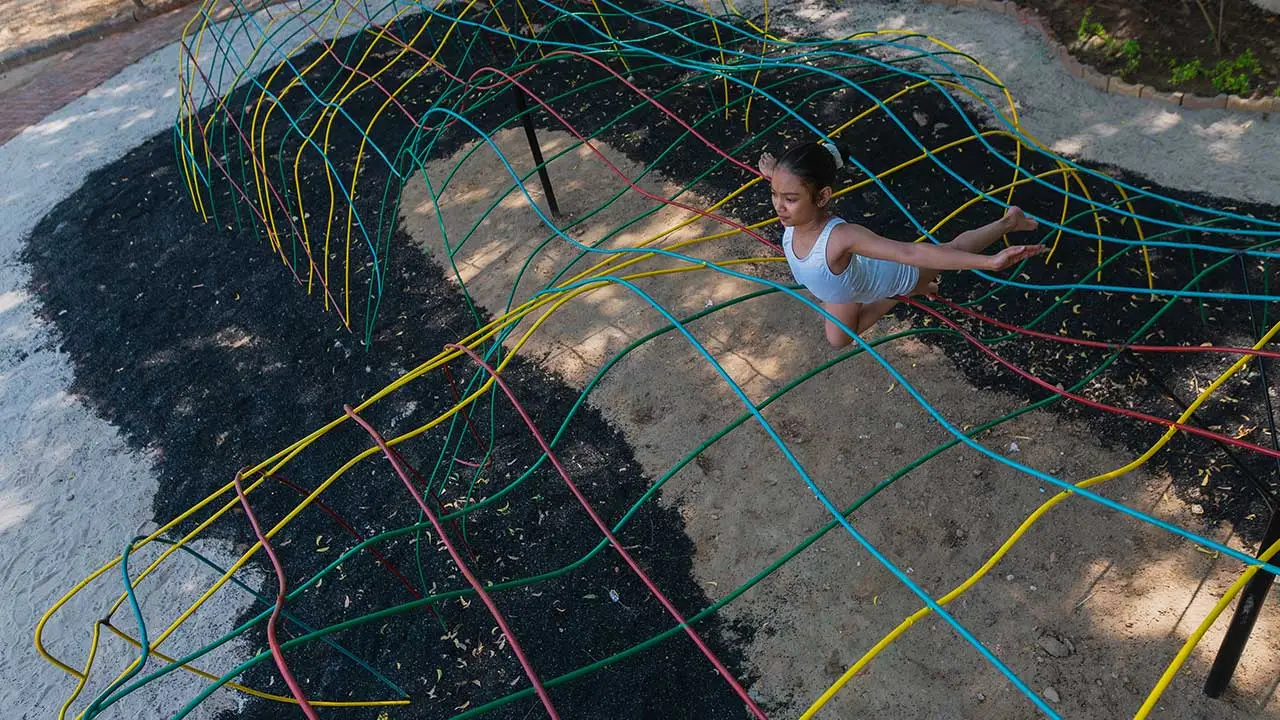
The park accommodates diverse users simultaneously. Children play within visible range of caregivers, teenagers occupy edges without obstructing flow, and seniors gravitate towards shaded, supportive seating. Runners and walkers navigate the central spine effortlessly, while vendors and community activities find space within a geometry that anticipates their presence. The design supports activity without requiring constant intervention.
Conclusion: A Civic Space that Teaches by Design
In its entirety, Chakrajeevan Udyan offers more than a recreational landscape—it presents a model for how public spaces can align human comfort, social cohesion, and environmental responsibility.
The reuse of over 30,000 sqft of materials and the avoidance of 36 tonnes of carbon emissions are not isolated achievements; they are the direct outcome of a design philosophy rooted in circularity and local intelligence. By translating these metrics into relatable narratives, the project invites citizens to understand and participate in its ecological ethos.
At its core, the park is a place of dignity and delight. It welcomes the youngest and the oldest with equal ease, allowing communities to gather, move, and rest without friction. Familiar materials and intuitive forms create a sense of belonging, while thoughtful detailing signals care—encouraging users to reciprocate that stewardship.
If a public space can quietly educate, Chakrajeevan Udyan does so with clarity. It demonstrates that safety and sustainability are not separate ambitions, but interconnected outcomes—shaped through design decisions that are as empathetic as they are intelligent.

Specifications:
- Project: Chakrajeevan Udyan (Circle of Life Park)
- Location: Ahmedabad
- Type: Urban design, Landscape Design
- Area: 40,000 sqft