
Taj Mahal Architecture & Building Materials: Why It’s the Most Beautiful Building in the World 2025
- July 11, 2025
- By: Syed Md. Ehteshamul Hasan
- NEWS
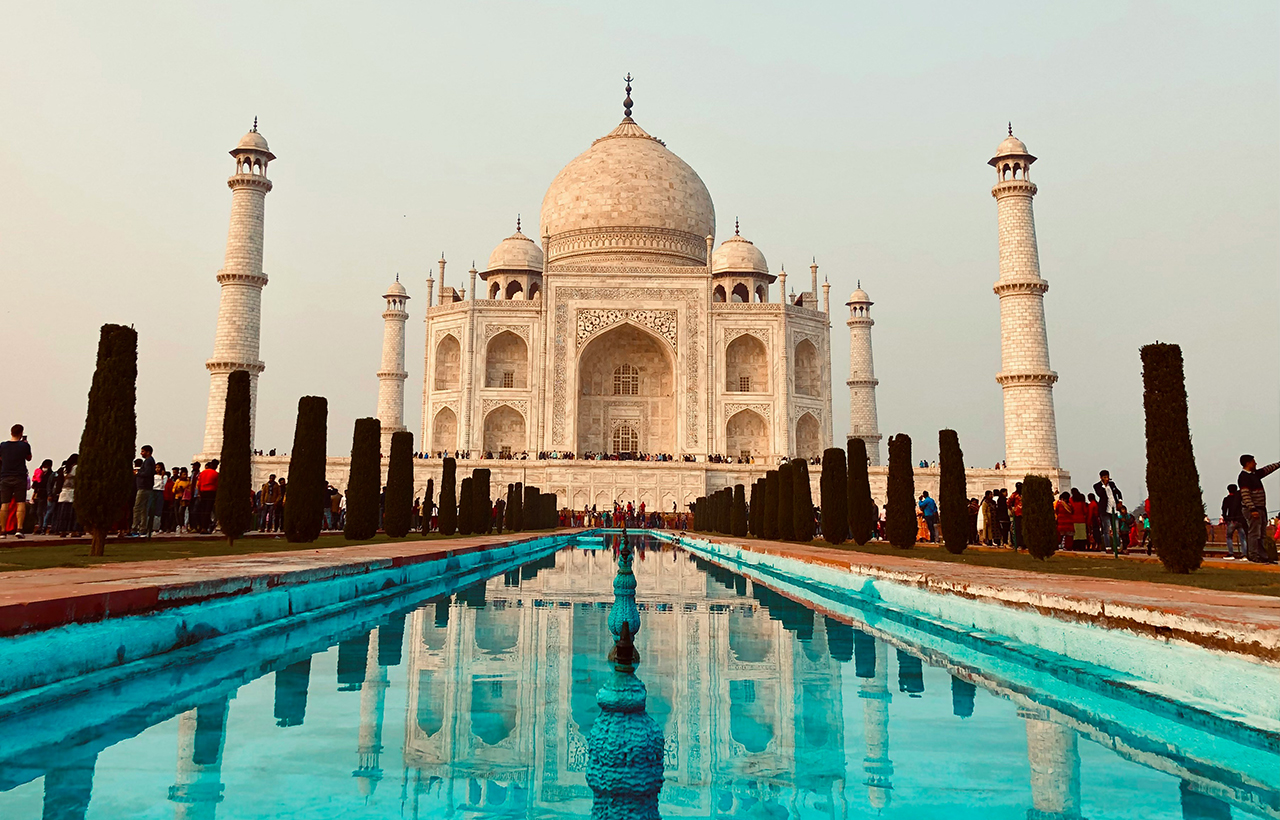
Few structures in the world command the kind of universal admiration that the Taj Mahal does—an architectural masterpiece where emotion, craftsmanship, and precision converge seamlessly. Recently named the most beautiful building in the world 2025, the monument continues to reaffirm its timeless appeal. But beyond its romantic narrative lies a deeper story of Taj Mahal architecture, where symmetry, geometry, and an extraordinary selection of building materials come together to create an experience that is as technical as it is poetic.
From the luminous quality of Makrana marble to the intricate pietra dura inlay work, every element contributes to a design language that has inspired generations. This is not merely a monument of love, but a benchmark in architectural excellence—one that continues to shape how we understand beauty in the built environment.
Introduction: A Global Recognition That Feels Timeless
In a recognition that echoes what the world has long believed, the Taj Mahal has been named the most beautiful building in the world 2025 by Time Out. Featured at the top of its list of “24 Most Stunning Architectural Marvels on the Planet,” the monument continues to reaffirm its position as the pinnacle of Taj Mahal architecture and global design excellence.
While accolades such as this bring renewed attention, the Taj Mahal’s appeal has never depended on rankings. For centuries, it has stood as a universal symbol of beauty, craftsmanship, and emotional depth. Recognised as a UNESCO World Heritage Site and one of the New Seven Wonders of the World, it continues to draw admiration not just for its story, but for its extraordinary design and Taj Mahal building materials that have endured time.
History & Origins: Who Built the Taj Mahal and Why?
The story of the Taj Mahal begins with Shah Jahan Mumtaz Mahal, a narrative rooted in love, loss, and legacy. Commissioned in 1648 by Mughal Emperor Shah Jahan in memory of his wife Mumtaz Mahal, the monument was envisioned as a mausoleum—but evolved into something far greater.
Understanding the Taj Mahal history reveals that this was not merely a royal project, but a deeply personal one. It took over 22 years to complete and involved more than 20,000 artisans, craftsmen, and labourers from across regions.
Situated in Agra, the Taj Mahal reflects the peak of Mughal architecture, where artistic ambition met engineering precision. What distinguishes it is not just scale, but intention—every detail, from layout to ornamentation, was designed to evoke emotion.
Shah Jahan & Mumtaz Mahal — The Story Behind the Monument
The emotional foundation of the Taj Mahal lies in the relationship between Shah Jahan Mumtaz Mahal. Mumtaz Mahal was not only the emperor’s consort but also his trusted companion. Her passing during childbirth deeply affected Shah Jahan, inspiring him to create a monument that would immortalise their bond. This emotional narrative is embedded within the spatial and visual composition of the monument—making Taj Mahal architecture not just structurally significant, but emotionally resonant.
Taj Mahal Architecture: Design Principles That Define Its Beauty
The brilliance of Taj Mahal architecture lies in its ability to combine multiple design philosophies into a single, cohesive form. It represents a refined synthesis of Indo-Islamic architecture, Persian influences, and classical Mughal architecture.
Indo-Islamic & Mughal Style — A Perfect Fusion
At its core, the Taj Mahal is a masterclass in Indo-Islamic architecture, where geometric precision meets ornamental richness. The Mughal design language introduces symmetry, axial planning, and grand domes, while Indian craftsmanship adds intricate detailing and material finesse. The result is a structure that feels both monumental and delicate—an achievement rarely matched in architectural history.
Symmetry, Dome Geometry & Earthquake-Resistant Minarets
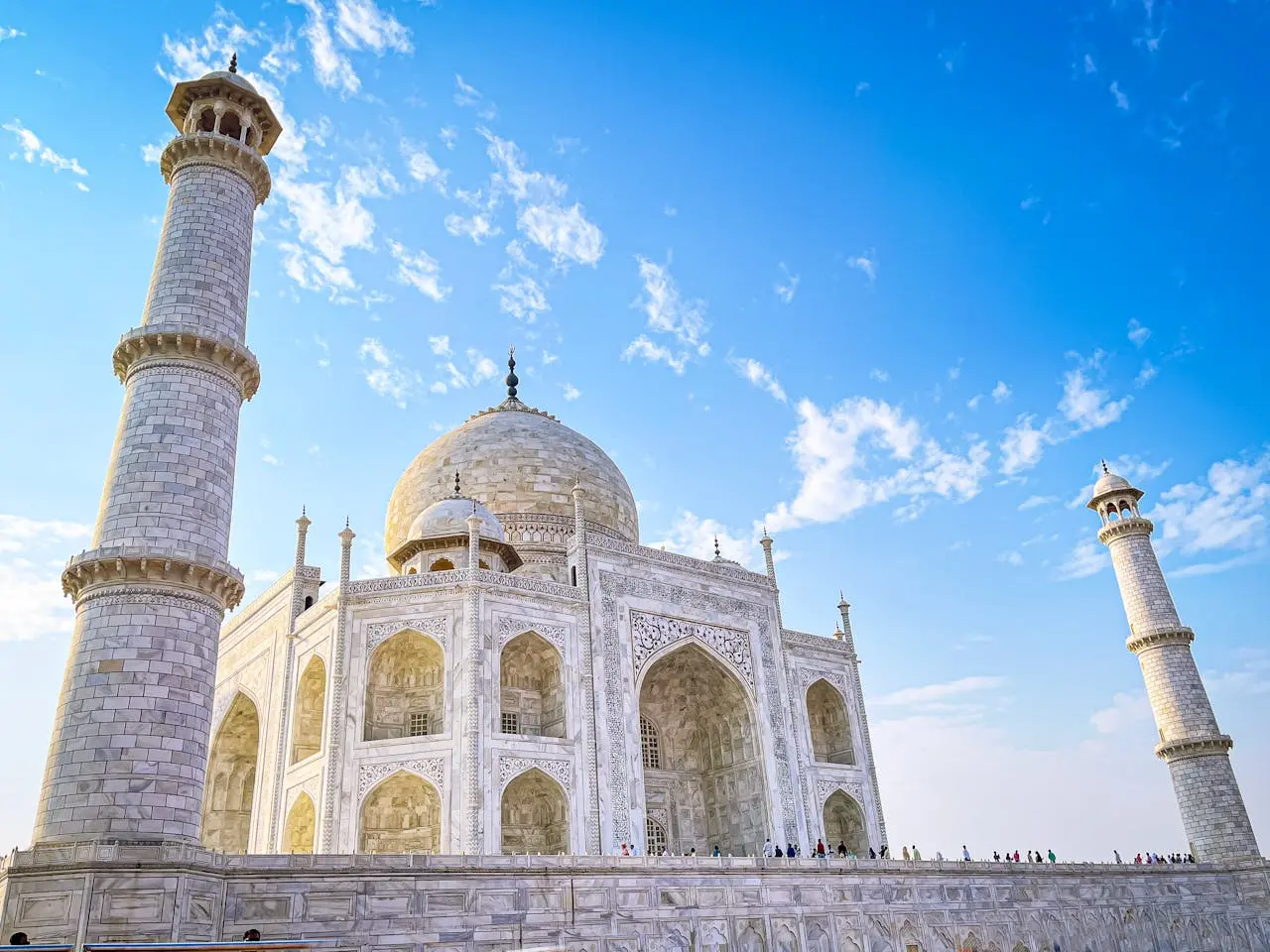
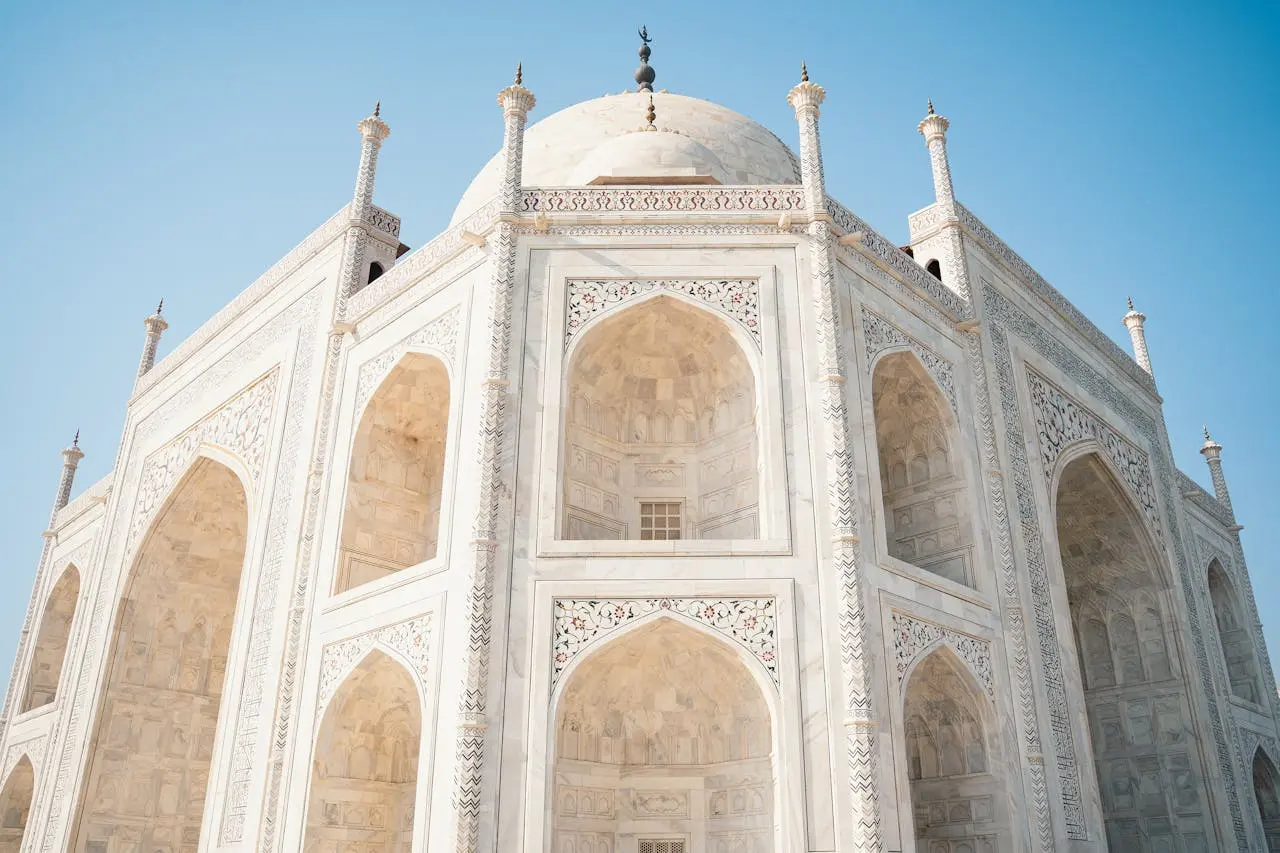
One of the defining aspects of Taj Mahal architecture is its near-perfect symmetry. The central dome, rising to approximately 73 metres, is balanced by four minarets placed at each corner. Interestingly, these minarets are slightly tilted outward—a subtle yet ingenious engineering decision. In the event of an earthquake, they would fall away from the main structure, protecting the mausoleum. This integration of aesthetics and engineering demonstrates the sophistication of Mughal architecture, where beauty never compromises structural intelligence.
Building Materials: What the Taj Mahal Is Actually Made Of?
A major reason behind the monument’s enduring appeal lies in its carefully selected Taj Mahal building materials. These materials were not only chosen for their visual quality but also for their durability and performance.
Makrana Marble — The Soul of the Taj Mahal
The most defining element of the structure is its Makrana marble, sourced from Rajasthan. Known for its exceptional purity and fine grain, Makrana marble gives the Taj Mahal its iconic white appearance.
This Taj Mahal white marble is not just aesthetically superior—it is highly durable and resistant to weathering. Its ability to reflect light differently throughout the day is what gives the monument its ever-changing visual character.
The use of Makrana marble elevates the structure beyond conventional stone construction, turning it into a luminous architectural entity.
Pietra Dura Inlay: Craftsmanship in Stone
Equally remarkable is the intricate pietra dura inlay work that adorns the surfaces of the Taj Mahal. This technique involves embedding semi-precious stones such as lapis lazuli, jade, turquoise, and agate into marble to create floral and geometric patterns.
The precision required for pietra dura inlay is extraordinary, with artisans hand-cutting and fitting each piece into the marble base. This level of craftsmanship reflects the highest standards of Mughal architecture.
In addition to marble, red sandstone was used in surrounding structures, providing contrast and enhancing the visual composition.
Why the Taj Mahal Changes Colour Through the Day?
The Taj Mahal appears to change colour through the day primarily because of the unique optical qualities of its Makrana marble and the way it interacts with natural light. This high-quality white marble has a slightly translucent surface that absorbs and reflects light differently depending on the time of day and atmospheric conditions.
At sunrise, the monument often takes on a soft pink hue due to the low-angle sunlight filtering through morning haze. By midday, when the sun is directly overhead, the Taj Mahal appears bright white, reflecting the intense light uniformly. As evening approaches, the setting sun casts a warm golden glow, giving the structure a subtle amber tone. Under moonlight, the marble reflects a cool, bluish tint, creating an almost ethereal appearance.
This changing palette is not just a visual phenomenon but also a reflection of the monument’s emotional symbolism—shifting moods that mirror the passage of time.
Global Legacy: UNESCO, New 7 Wonders & Time Out 2025?
The Taj Mahal’s recognition as the most beautiful building in the world 2025 is part of a long list of global accolades. As a UNESCO World Heritage Site and one of the New Seven Wonders of the World, it continues to be a benchmark for architectural excellence.
Its influence extends across disciplines—architecture, art, literature, and even modern design. For many, it represents the pinnacle of Taj Mahal architecture, where emotion and engineering coexist seamlessly.
Conclusion
Centuries after its construction, the Taj Mahal continues to define what architectural excellence looks like. Its recognition as the most beautiful building in the world 2025 only reinforces what has always been evident—that great design transcends time.
Through its masterful use of Taj Mahal building materials, its refined proportions, and its emotional depth, the monument stands as the ultimate expression of Taj Mahal architecture. It is not just a structure—it is a timeless dialogue between art, engineering, and human emotion.
FAQs
1. What makes Taj Mahal architecture unique?
Taj Mahal architecture stands out due to its perfect symmetry, integration of Indo-Islamic architecture, and refined use of Mughal architecture principles combined with exceptional craftsmanship.
2. What materials were used to build the Taj Mahal?
The primary Taj Mahal building materials include Makrana marble, red sandstone, and intricate pietra dura inlay using semi-precious stones.
3. Why is Makrana marble used in the Taj Mahal?
Makrana marble was chosen for its durability, luminosity, and ability to reflect light, giving the monument its iconic appearance.
4. What is pietra dura inlay in the Taj Mahal?
Pietra dura inlay is a decorative technique where semi-precious stones are embedded into marble to create intricate patterns.
Also read: Discovering the Submerged Architectural Marvel- Dwarka
Also read: PM Modi to Inaugurate UAE’s First Hindu Temple
Also read: A Perfect Confluence of Design and Science, Ayodhya Ram Mandir Is a Visual Treat