
The Future of the Building Material Industry: 5 Trends That Will Shape the Market
- November 25, 2026
- By: Building Material Reporter
- NEWS
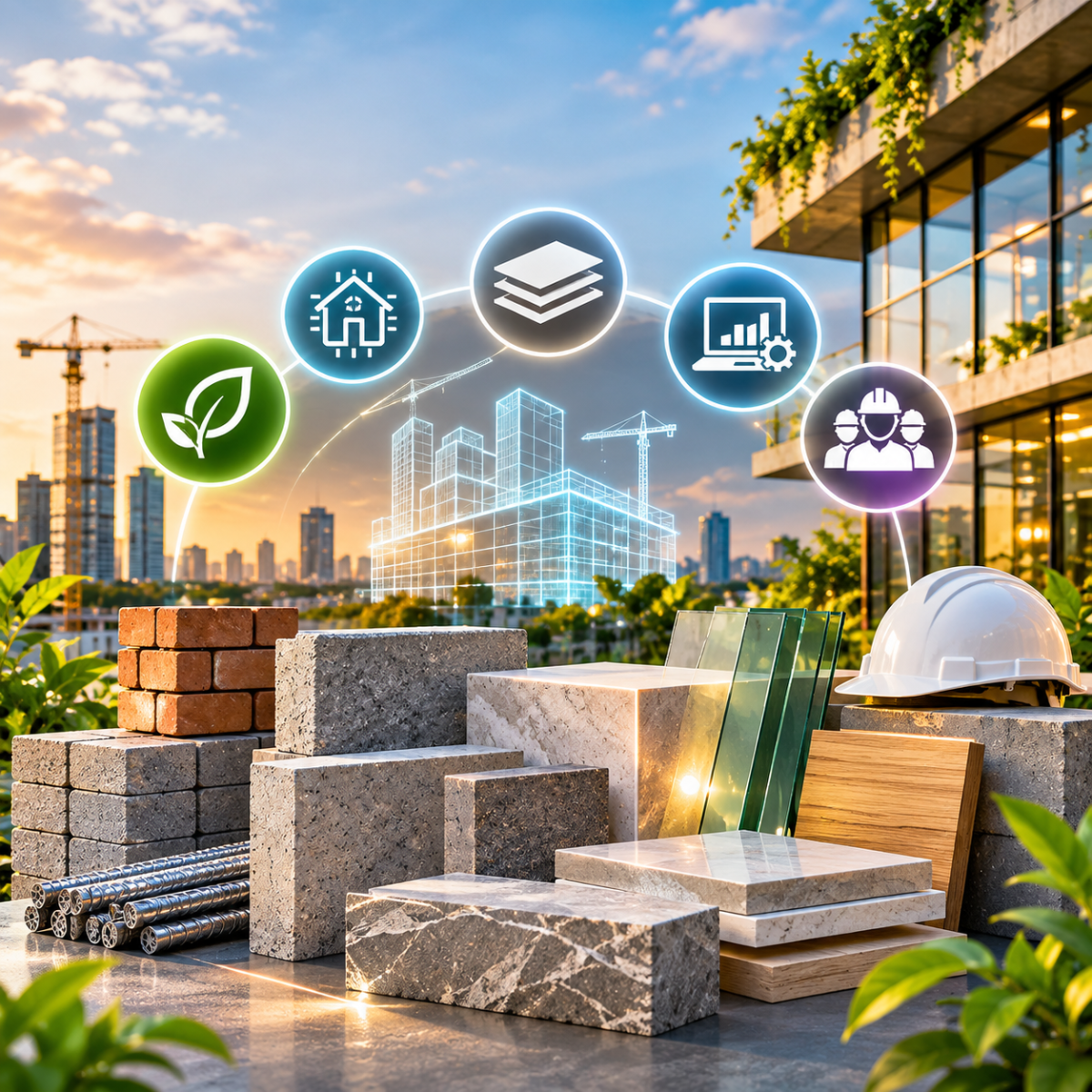
The Future of the Building Material Industry is changing rapidly. Just a decade ago, when someone planned a house or any other building, they would ask two simple questions about construction materials: Does my budget allow it, and is it durable? Today, customer expectations have evolved, and so have their questions. Buyers now want to know whether a product is eco-friendly, how much time installation will take, and how reliable it is.
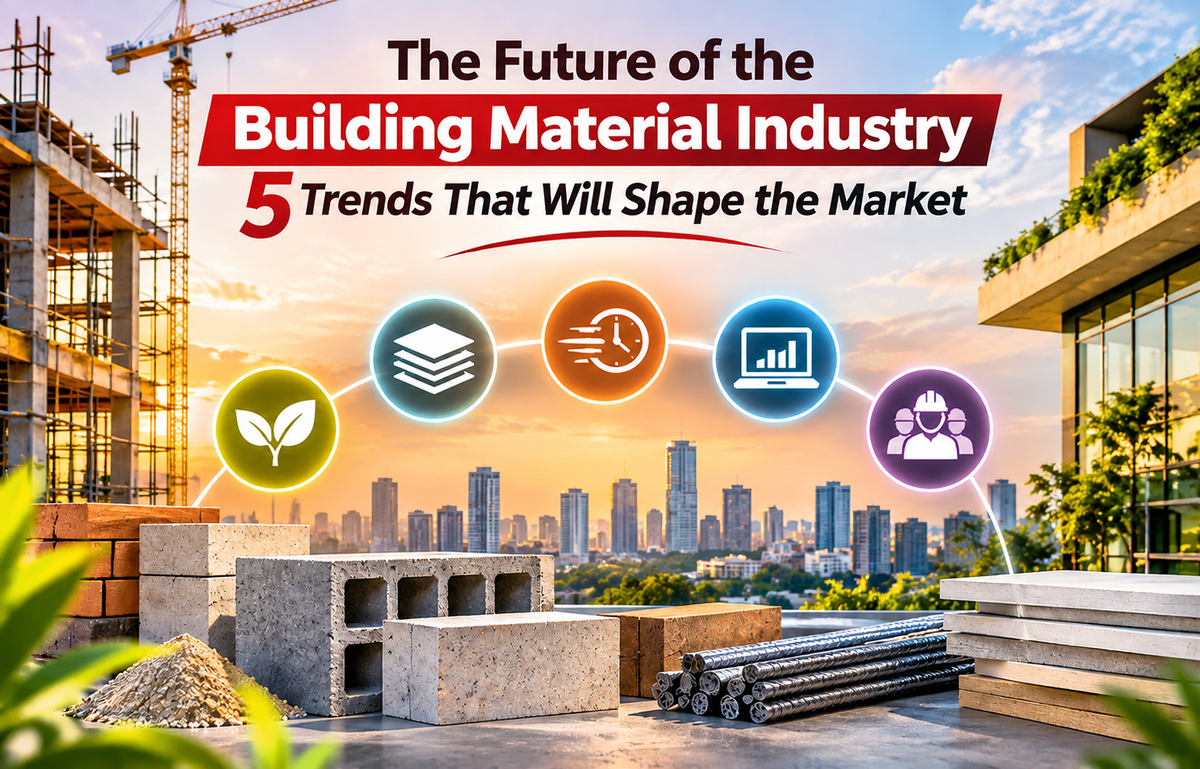
These changing demands are introducing new trends and innovations in the construction sector. From sustainable materials and smart technologies to digitalisation and faster construction methods, several developments are shaping the Future of the Building Material Industry.
In this article, we explore five major trends that are expected to influence the building materials market in the coming years.
1. Sustainability Is No Longer an Option
Just a few years ago, a product with a "green" label was considered an additional and slightly more expensive option. Today, sustainability is becoming the new normal.
Cement and steel production contribute significantly to pollution, so companies are responding by developing low-carbon cement, using recycled materials, and powering their factories with clean energy such as solar power.
Investors, builders, and buyers are increasingly asking for proof that products are environmentally friendly. As sustainability becomes a priority, eco-friendly materials and responsible manufacturing practices will play an increasingly important role in the Future of the Building Material Industry.
2. Smart Building Materials
We are living in the era of technology, so how can the building material industry be left behind? Building materials are becoming smarter with every passing year.
The market has introduced self-healing concrete that can repair small cracks, advanced waterproofing systems that help prevent seepage, and energy-efficient glass that can reduce cooling requirements.
Modern lightweight panels are also offering impressive strength and performance. Customers are moving beyond simply looking for cheaper products and are increasingly choosing materials that offer durability, efficiency, and lower maintenance costs.
3. Dry Construction
Time has become a crucial factor in construction. That is why dry construction is gaining popularity as an alternative to traditional construction methods.
It includes gypsum partitions, false ceilings, and factory-manufactured panels that are transported to construction sites and installed directly.
The benefits are clear: projects can be completed faster, fewer workers may be required, and construction sites remain cleaner. For dealers and contractors, this also means learning about new products, technologies, and installation methods.
Dry construction is becoming an important part of modern construction practices and will continue to influence the Future of the Building Material Industry.
4. Digitalisation of Building Materials
While the whole world is going digital, the building material industry is also embracing technology.
Manufacturing facilities are increasingly using automated machines and data-driven systems to improve product quality. QR codes allow buyers to check product authenticity and access important product information.
Orders are now placed, processed, and delivered through digital platforms and applications, making the market more competitive for brands and more convenient for buyers.
5. Increasing Influence of Building Industry Influencers
The design of a home is no longer influenced by just one person. Architects, interior designers, contractors, dealers, and homeowners all play important roles in selecting building materials.
Brands are organising experience centre visits, architect meets, product demonstrations, and interactive sessions that allow customers to learn directly from material experts.
These initiatives help customers make informed decisions while allowing brands to build trust, credibility, and stronger relationships with their audiences.
Conclusion: What Lies Ahead for the Building Material Industry?
In short, the Future of the Building Material Industry will be greener, smarter, faster, and more digital.
Brands that adapt to changing customer expectations, embrace innovation, and focus on sustainability will be better positioned for future growth. Those that fail to evolve may struggle to remain competitive.
The construction sector is entering a new phase of transformation, and the companies that keep pace with these changes will help shape the next generation of building materials and construction solutions.