
Twin Harmony: Ar. Purnima Sharma’s Courtyard House in Agra Designed for a Multi-Generational Family
- April 11, 2026
- By: Syed Md. Ehteshamul Hasan
- INFLUENCERS
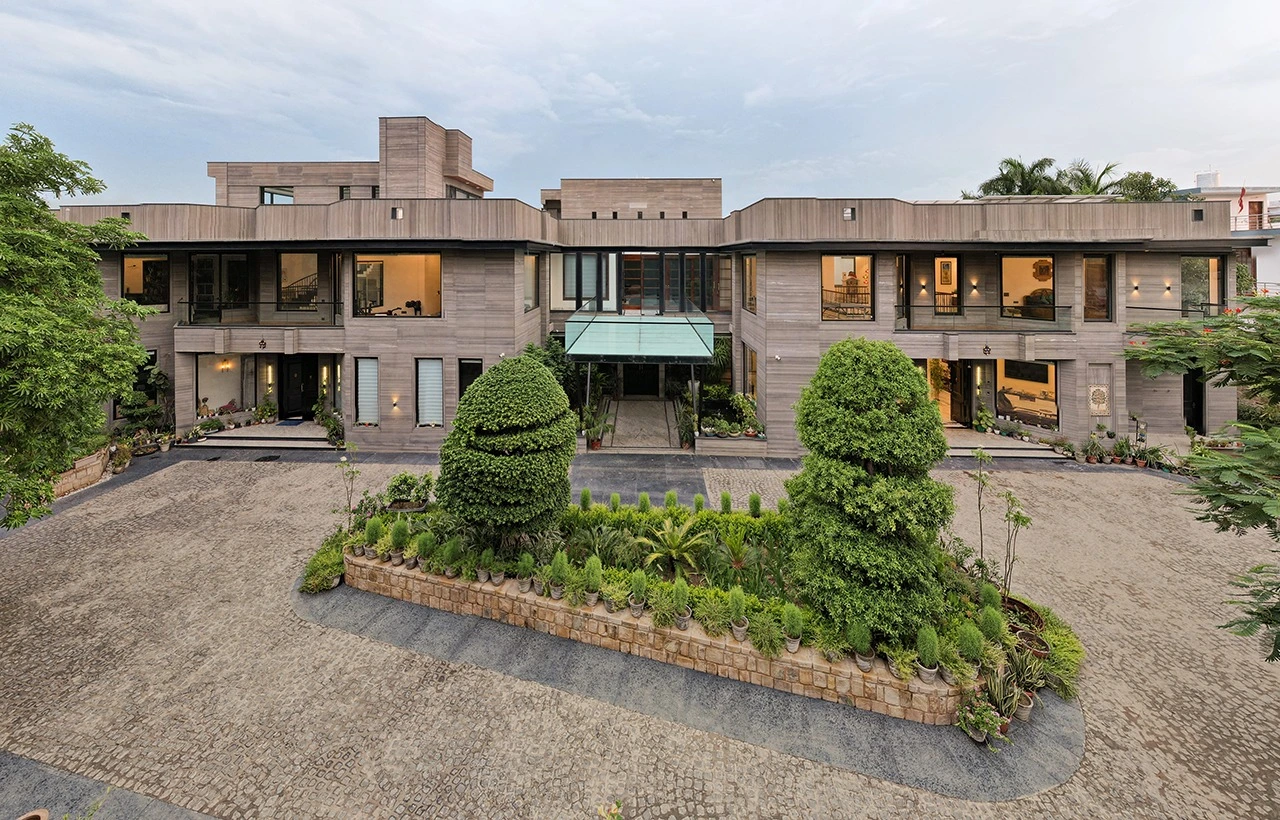
Designed by Ar. Purnima Sharma, founder& principal of Chandigarh-based CAPT Consultants, this expansive 17,000 sqft residence in Agra presents a refined interpretation of the courtyard house design of India, where privacy, family bonding, and contemporary living coexist seamlessly.
Conceived as a multi-generational home, this residential project responds to the needs of a large family through a thoughtful dual family home design approach that balances independence with togetherness.
With more than four decades of experience, Ar. Purnima Sharma is known for crafting residences that merge timeless elegance with contextual planning. This luxury house design in the world’s wonder city, Agra stands as a compelling example — a bespoke home created for a four-generation family. Through carefully articulated spaces and a shared courtyard home concept, the design establishes harmony between tradition and modern living.
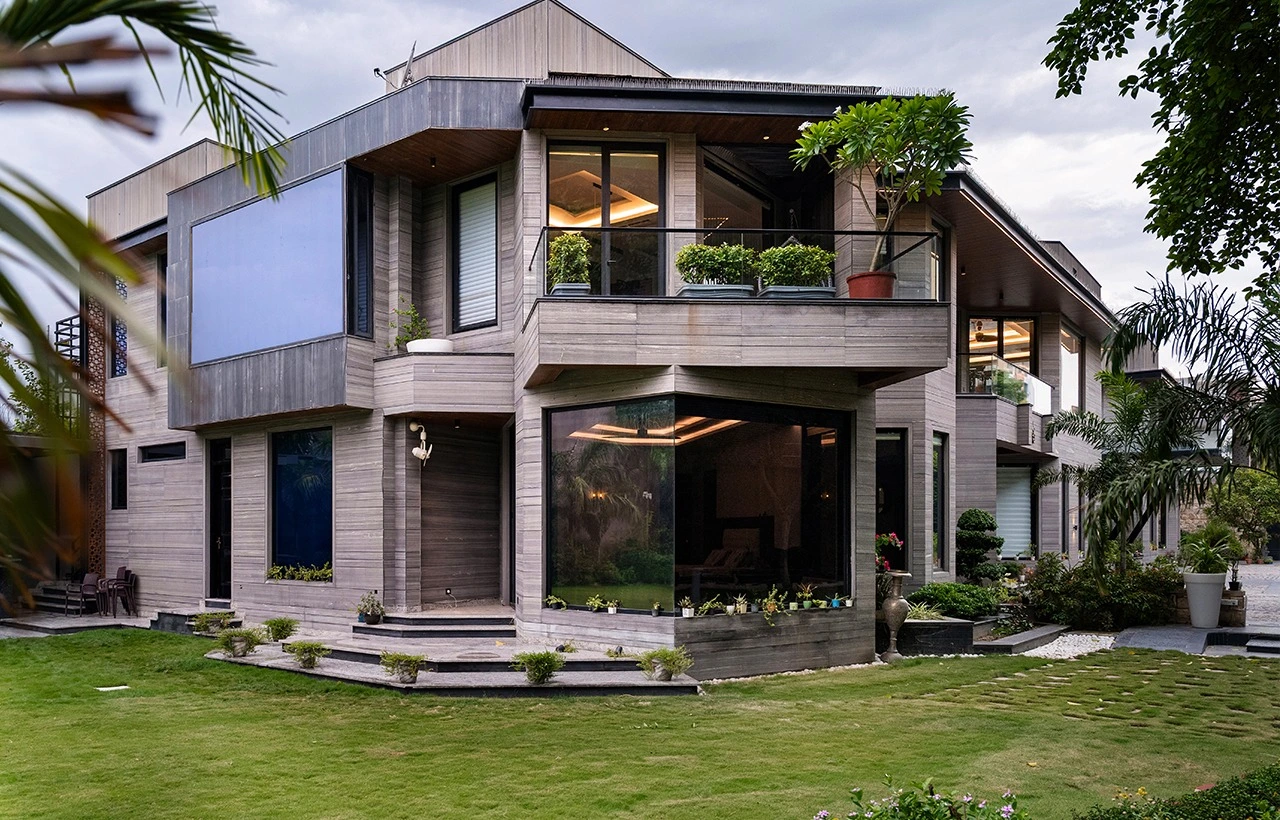
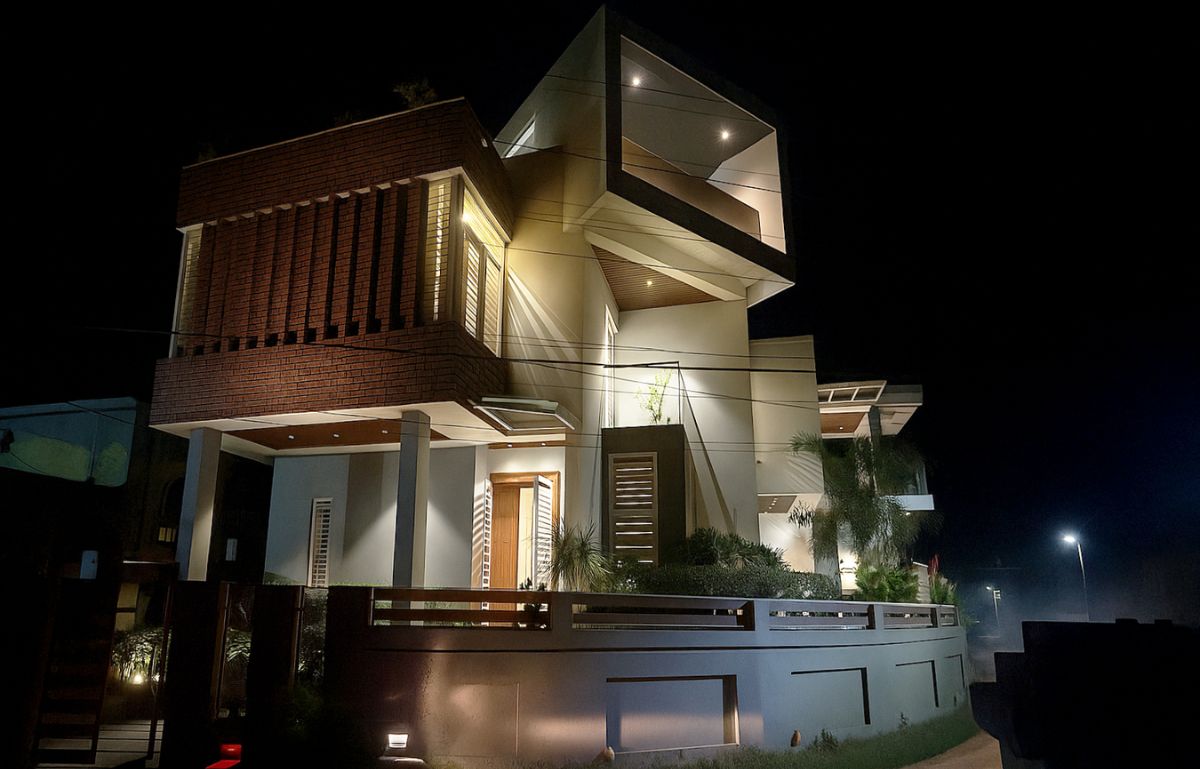
At first glance, the villa presents itself as the kind of residence many aspire to own. Clad in warm wood-finished exteriors and framed by expansive glazing, the home opens towards lush landscapes that soften its architectural expression. Spread across approximately 17,000 square feet, the residence is conceived as a multi-generational home, accommodating a family of seven across two interconnected units. The 10-bedroom layout forms a well-articulated dual-family home design, with one wing for the daughter and the other for the son’s family — ensuring privacy while maintaining emotional proximity.
Courtyard House Design India: The Heart of Twin Harmony
At the centre of this courtyard house design lies a shared open space that acts as the emotional and spatial anchor of the home. Ar. Purnima Sharma explains that the design brief called for two distinct family units unified through a common zone. The result is a shared courtyard home in India that becomes the heart and breathing core of the residence.
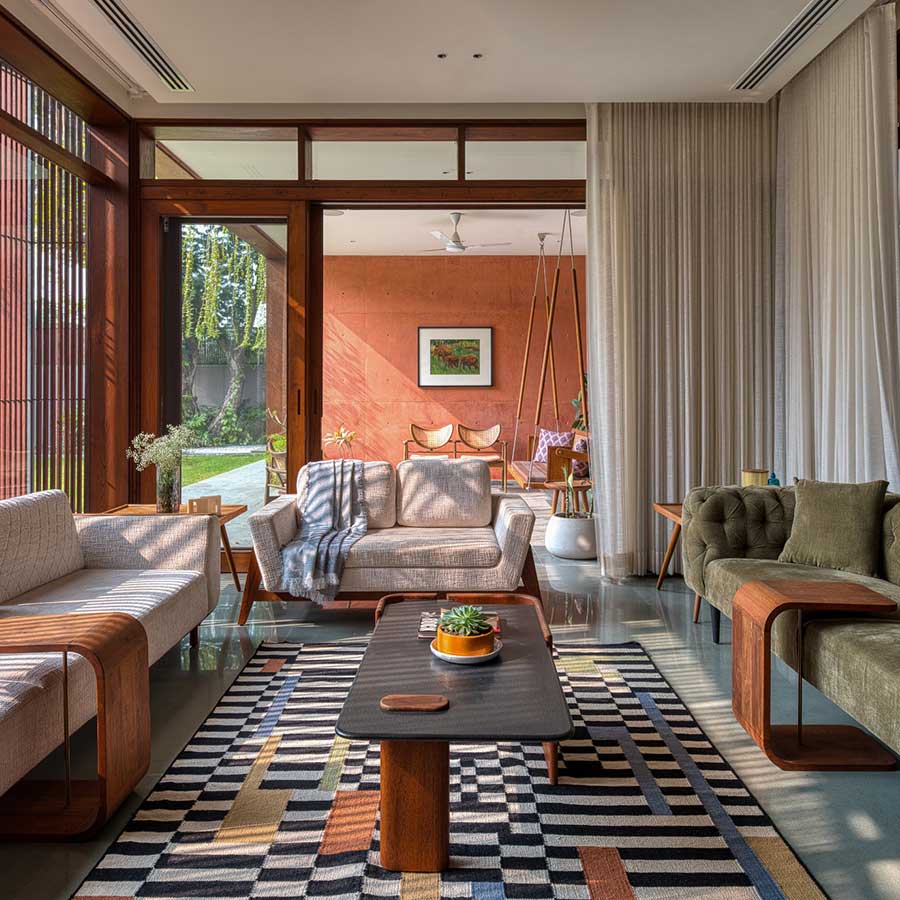
This central courtyard connects both wings through shared living areas, encouraging interaction while maintaining independence. Natural daylight filters through the open space, allowing light to travel deep into the interiors and creating changing spatial moods throughout the day. The courtyard also enhances cross-ventilation, reinforcing the environmental benefits of India’s very own traditional courtyard house design principles adapted for contemporary living.
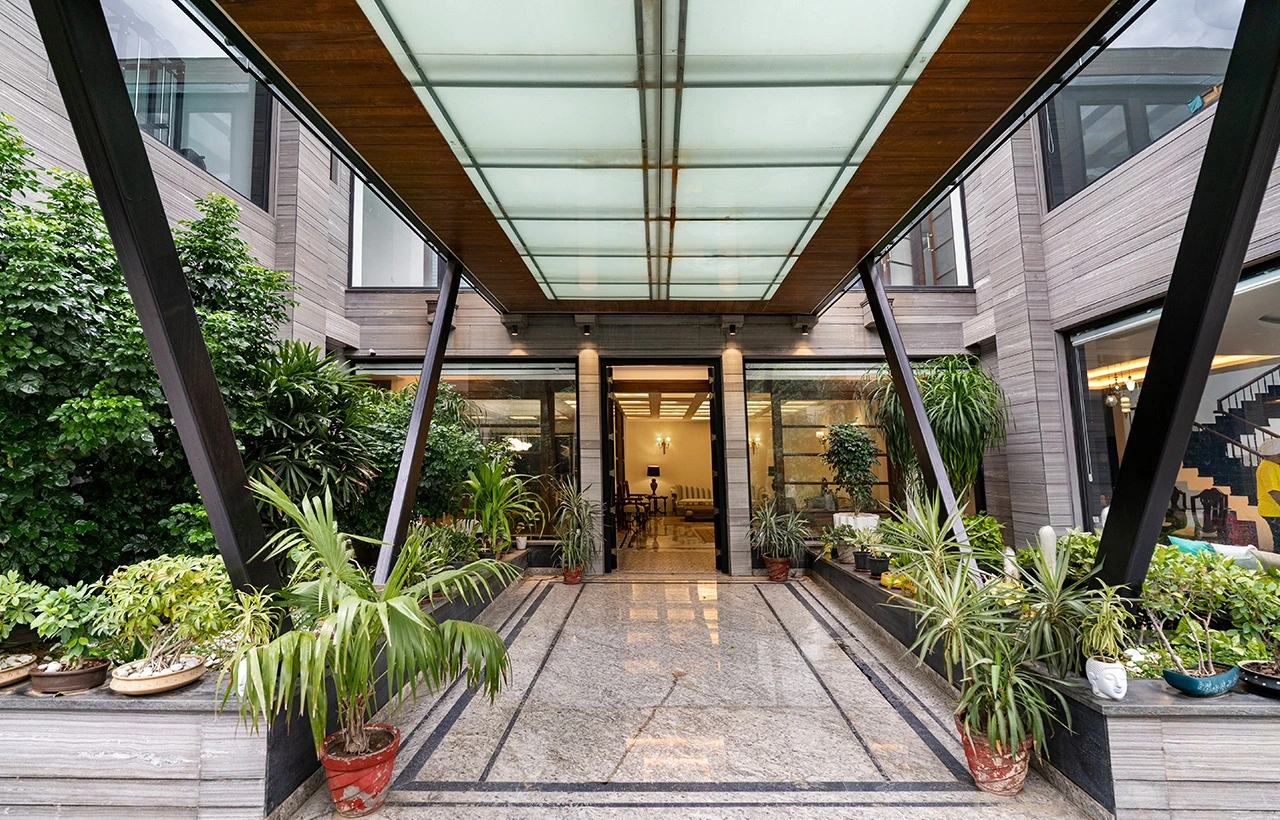
Material Pallets for Courtyard House Design
The material palette of the residence draws inspiration from the city’s legacy. Reflecting Agra’s craft heritage in architecture, locally sourced stone plays a dominant role in defining the building’s character. Black and grey marble surfaces, finished with both polished and flame textures, create visual depth while enhancing durability and thermal comfort. This use of locally sourced marble strengthens the project’s contextual relevance.
The façade features a striking black marble house exterior India, sandblasted to achieve subtle grey-white tonal variations. This refined treatment introduces understated elegance while grounding the home within Agra’s marble heritage. The material strategy also enhances the identity of this luxury house design in Agra, balancing modernity with cultural continuity.
The Outdoor Of Multi-Generational Home
Beyond the interiors, the client envisioned generous outdoor spaces that enhance daily living. The landscape design unfolds into a series of curated zones, including a bonfire garden, an existing banyan tree, a productive kitchen garden, and a serene water pond filled with lotuses and goldfish. These elements strengthen the connection between architecture and nature, reinforcing the project’s role as a multi-generational home in India where shared experiences extend beyond indoor spaces.
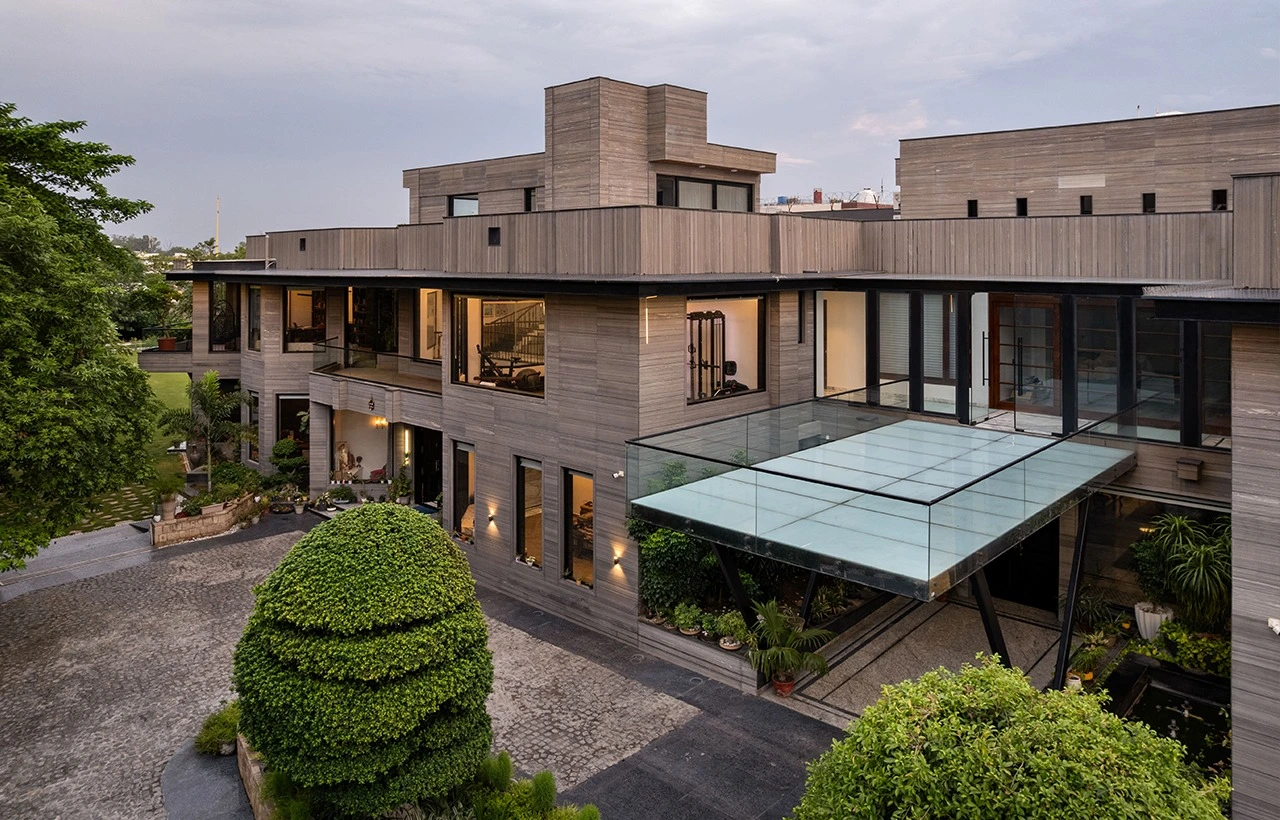
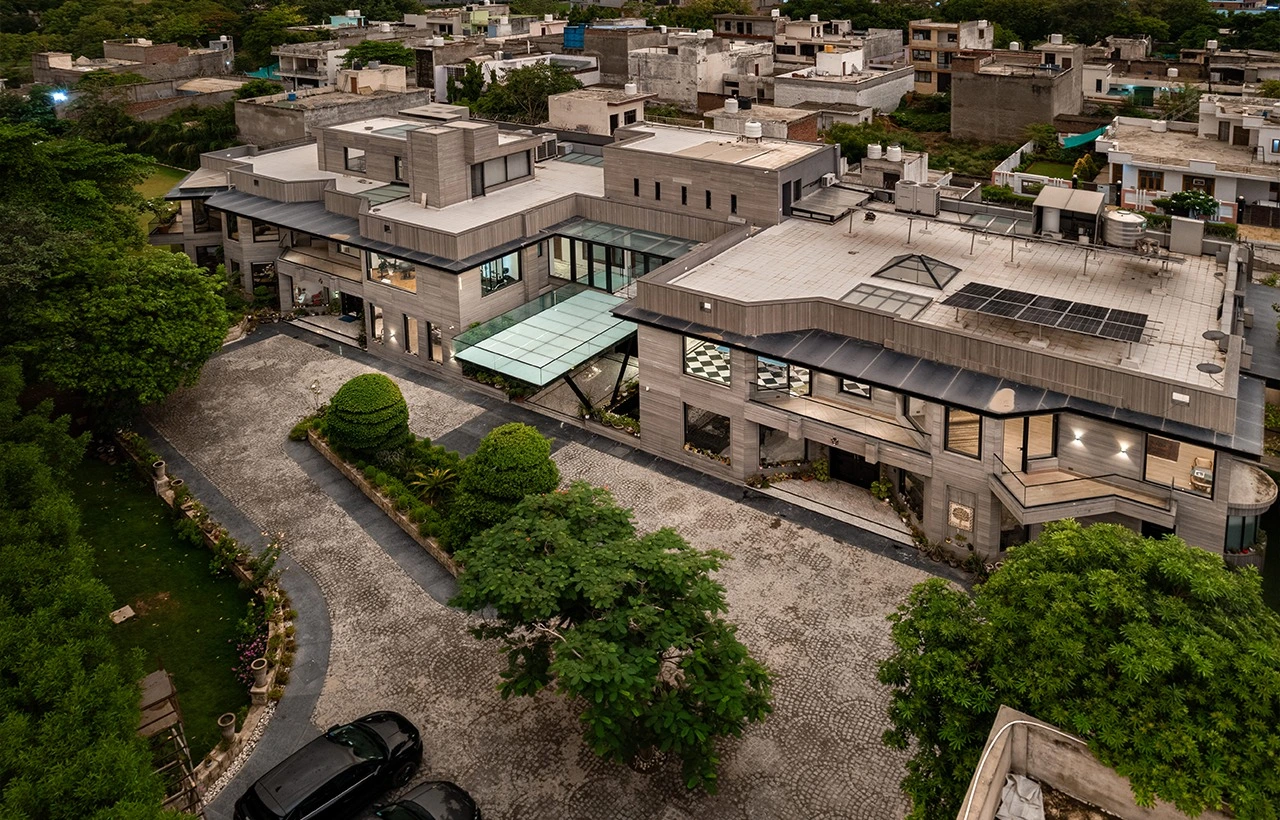
The residence also integrates terraces and elevated outdoor extensions. A glass aisle terrace, designed as both a circulation bridge and porch, adds a distinctive architectural feature. This element connects the two family wings while enhancing spatial transparency — further supporting the dual family home design India concept.
Smart Home Design India: Technology Meets Tradition
Despite its traditional spatial inspiration, the residence incorporates advanced technology. The home integrates smart home design solutions in India including automated lighting, climate control, and security systems. Energy-efficient smart lighting adapts to daylight rhythms, ensuring comfort for a four generation family home design.
These intelligent systems enhance convenience without compromising the warmth of the design. The integration of automation ensures that the multi-generational home in India remains functional, safe, and future-ready while preserving its human-centric planning.
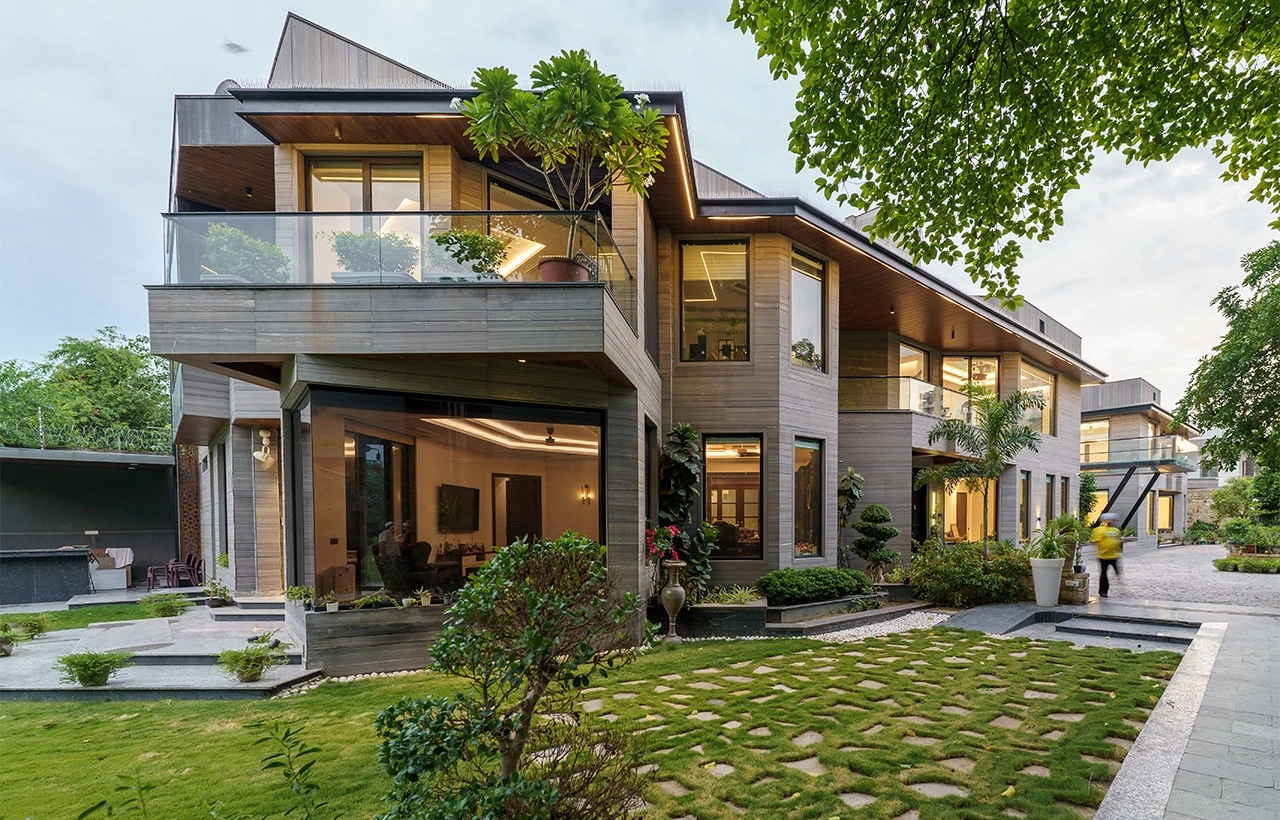
With its balanced planning, landscaped surroundings, and technological integration, the residence exemplifies how architecture can elevate everyday life. For Ar. Purnima Sharma, the project remains deeply personal, reflecting her philosophy of creating spaces that nurture both community and individuality.
About the Architect – Ar. Purnima Sharma, Founder, CAPT Consultants
Ar. Purnima Sharma of CAPT Consultants brings over four decades of experience in residential and architectural design. Based in Chandigarh, her practice focuses on blending art, nature, and architecture into cohesive environments. Her work often reflects contextual sensitivity, strong detailing, and an emphasis on spatial storytelling. Through projects like this courtyard house design, she continues to explore how traditional planning principles can inform contemporary luxury house design Agra and beyond.

Key Specifications: Twin Harmony
- Area: Approx. 17,000 sq ft
- Typology: Dual Family Residential
- Family Type: Four-Generation
- Location: Agra, Uttar Pradesh
- Firm: CAPT Consultants, Chandigarh
- Lead Architect/Designer: Ar. Purnima Sharma
- Material Highlight: Black & Grey Marble (Locally Sourced)
FAQ
1. What is Twin Harmony, the house in Agra designed by Ar. Purnima Sharma?
Twin Harmony is a dual family home design created by Ar. Purnima Sharma of CAPT Consultants. It follows a courtyard house design approach, bringing two family units together within one unified residence.
2. How does a central courtyard work in a dual family home in India?
A shared courtyard home in India connects spaces while maintaining privacy. In this multi-generational home in India, the courtyard enhances daylight, ventilation, and interaction between family members.
3. What materials were used in the Twin Harmony house in Agra?
The residence features a black marble house exterior using locally sourced marble architecture, reflecting Agra’s craft heritage in India’s architecture through polished and flame-finished textures.
4. How was the narrow plot challenge addressed in the Twin Harmony house design?
The narrow plot house design India was resolved through a linear layout organised around a courtyard house design in India, ensuring light and ventilation.
5. What smart home features does the Twin Harmony house in Agra include?
The home incorporates smart home design India features such as automation, smart lighting, and energy-efficient systems.
6. How is Twin Harmony designed for a four-generation family?
The four generation family home design uses separate zones and shared spaces, creating a multi-generational home India that balances privacy and togetherness