
Red Fort Delhi Architecture: History, Features & Visitor Guide 2026
- August 30, 2024
- By: Syed Md. Ehteshamul Hasan
- INFLUENCERS
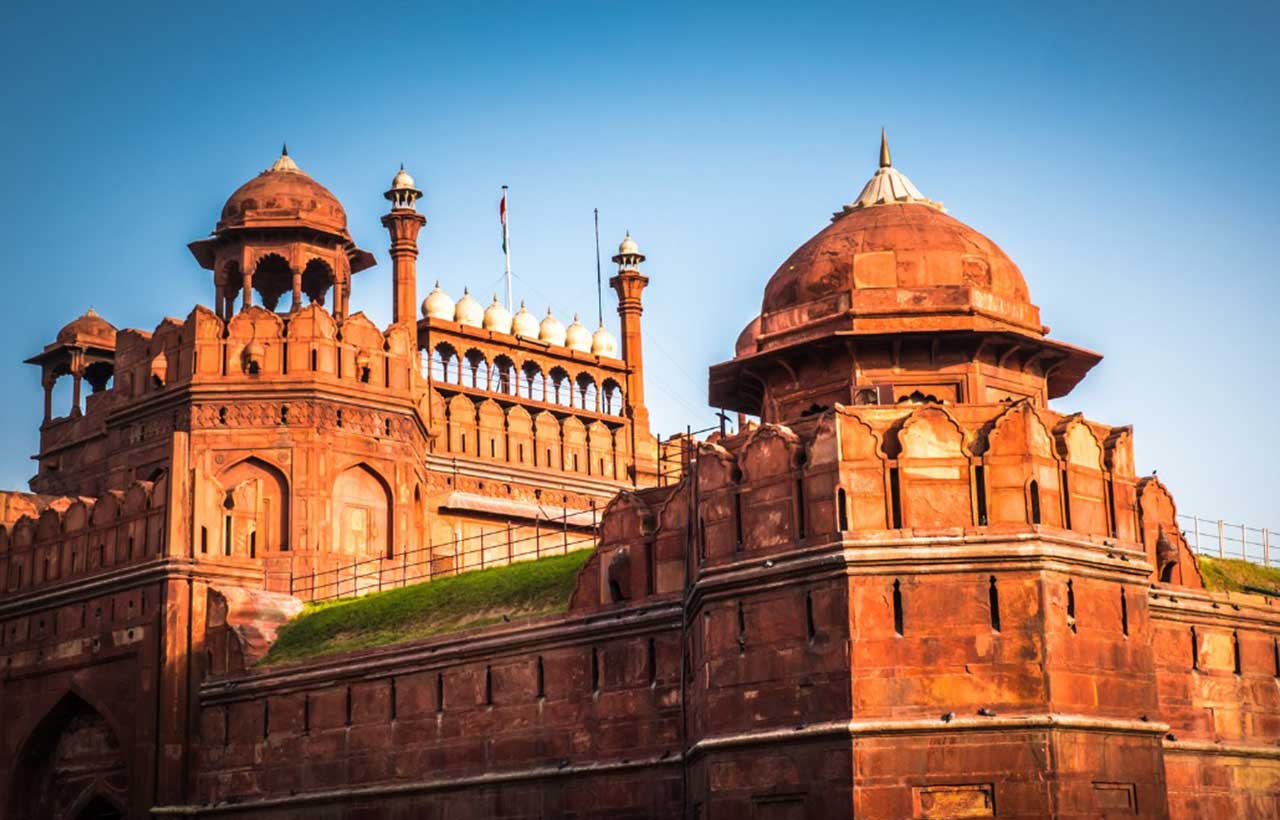 Few monuments in India command the historical stature and architectural grandeur of the Red Fort in New Delhi. Built by Mughal Emperor Shah Jahan in the 17th century, this iconic citadel remains one of the finest expressions of the Mughal Era's Architecture, where military strength, royal luxury, and artistic sophistication come together seamlessly. From its towering red sandstone walls to its ceremonial halls and gardens, the Architecture of Red Fort Delhi reflects the peak of Mughal craftsmanship. Today, as a UNESCO World Heritage Site and national symbol of sovereignty, Red Fort Delhi continues to stand as one of India’s most enduring architectural landmarks.
Introduction
A phenomenal representation of India’s Mughal past and a masterpiece that has stood the test of time, Red Fort Delhi Architecture continues to reflect the true essence of grandeur, power, and architectural heritage. Popularly known as the Lal Qila, the Red Fort stands in the heart of Delhi as one of the finest symbols of the Mughal Empire’s artistic and engineering brilliance. Built between 1638 and 1648 by Mughal Emperor Shah Jahan, the fort remains one of India’s most visited landmarks and a defining chapter in world architecture.
This UNESCO World Heritage Site functioned as the Mughal emperors’ principal residence for nearly 200 years until the British colonial era. The Red Fort facts are fascinating, but beyond statistics lies a monument that continues to shape India’s national identity and tourism landscape.
The Historical Background of Red Fort
Mughal Emperor Shah Jahan began constructing the Red Fort in 1638, the same year he shifted his capital from Agra to Shahjahanabad (present-day Old Delhi). Known for his patronage of architecture, Shah Jahan envisioned a new imperial city that would serve as the political, cultural, and social centre of his empire.
The fort was designed not only as the emperor’s palace but also as a symbol of Mughal authority and sophistication. It later witnessed another historic phase under Bahadur Shah Zafar, the last Mughal emperor, who was tried by the British in the fort’s Diwan-e-Khas in 1858.
The Red Fort also holds immense national significance. Every year on Red Fort Independence Day, India’s Prime Minister hoists the national flag here on 15 August, continuing a tradition that began after Jawaharlal Nehru’s historic speech in 1947.
Architectural Design of the Red Fort
The monument derives its name from the striking red sandstone used in its construction. Among the most celebrated Mughal architecture features visible here are symmetrical planning, richly ornamented gateways, water channels, floral motifs, arches, and monumental proportions.
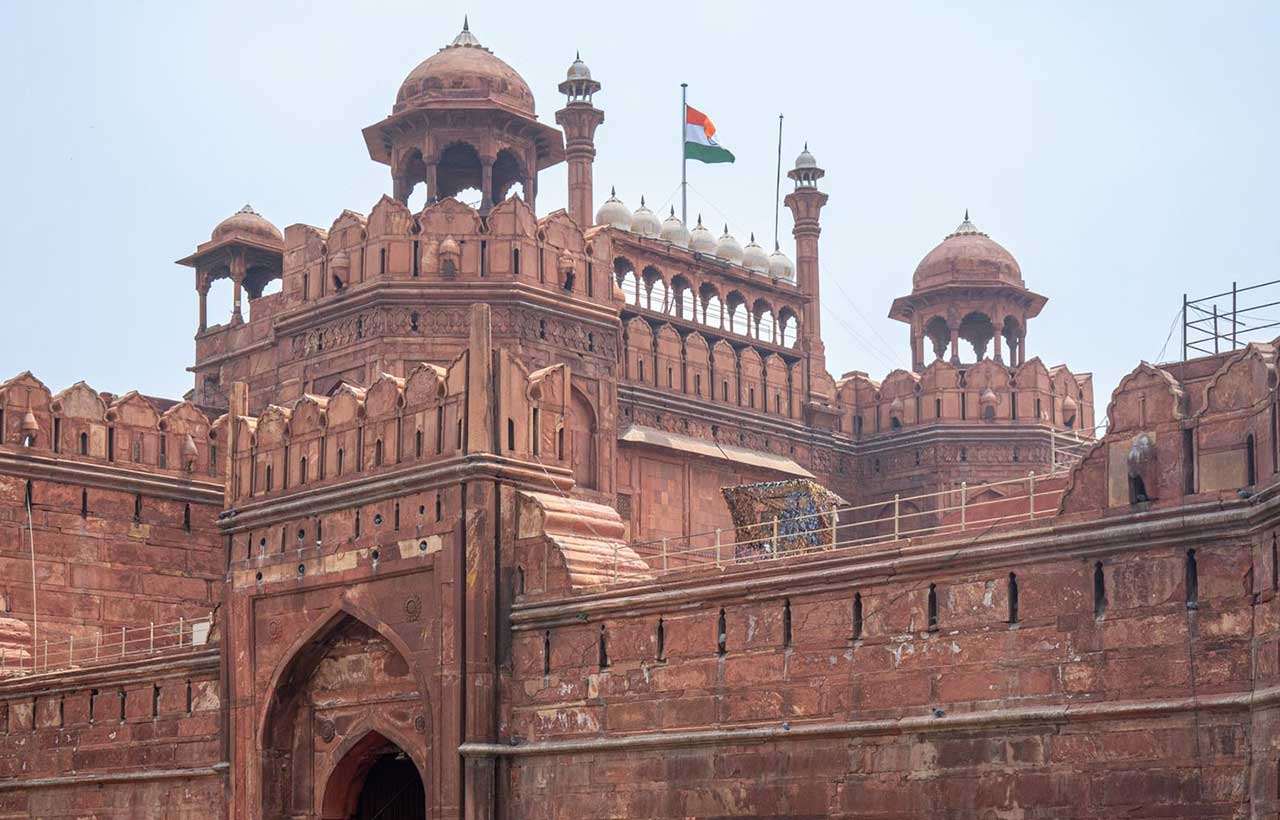
A moat once surrounded the double-walled enclosure, strengthening its defensive character. The Lahori Gate, the principal entrance, remains one of the most iconic gateways in India. Upon entering, visitors reach Chhatta Chowk (Jharokha Bazaar), a vaulted market street that once served as a bustling shopping arcade for the royal household and elite visitors.
As one moves deeper inside the fort complex, the balance between military planning and palace elegance becomes evident. Every courtyard, axis, and pavilion reflects the Mughal mastery of combining utility with beauty.
Stepping Inside: Palaces, Halls & Royal Spaces
Walking through the Red Fort feels like stepping into another era. One of its most significant structures is the Diwan-e-Khas, or Hall of Private Audience, where the emperor met courtiers, diplomats, and select guests. The hall is famed for its marble columns and intricate floral and geometric ornamentation.
Equally important is the Diwan-e-Aam (Hall of Public Audience), where the emperor addressed petitions and public matters. This grand space demonstrates how architecture was used to stage royal governance and ceremonial power.
Other remarkable buildings within the complex include: Hammam, an imperial bathhouse, the Rang Mahal, a vibrant palace used for royal ceremonies, the stunning white marble mosque known as Moti Masjid, and the emperor’s private residence – Khas Mahal. The Mughal Gardens, situated within the fort, are a carefully tended garden with an assortment of flowers, trees, and water features. Together, these structures reveal the luxurious lifestyle and refined craftsmanship of the Mughal court.
The Red Fort has had multiple roles throughout the years, including that of a magnificent palace for Mughal emperors, a strategically important defensive fort, and a representation of national sovereignty. The architecture combines Islamic, Indian, and Persian elements. Mughal architecture is distinguished by its symmetrical layout, elaborate carvings, and use of red sandstone. The fort's construction, which made use of cutting-edge engineering and building methods, also reflects the technological developments of the day.
Key Architectural Features of the Red Fort
It took nearly ten years to complete the fort, from 1638 to 1648. The Red Fort architect name most closely associated with its design is Ustad Ahmad Lahori, who is also credited with the Taj Mahal.
Its location along the Yamuna River was strategically chosen for both defence and water access. The fort once featured elaborate hydraulic systems that channelled water into gardens, fountains, and living quarters.
The imperial apartments were arranged along the famed Nahr-e-Behisht (Stream of Paradise), a water channel flowing through a sequence of pavilions. This planning concept reflected Persian paradise garden ideals adapted into Mughal palace life. The Kohinoor Diamond is also believed to have once adorned furnishings within the richly decorated palace interiors.
Symmetry in Red Fort’s Design
The Red Fort follows an almost perfectly symmetrical layout, with major buildings and gardens arranged in balanced order. The Lahore Gate and Delhi Gate are aligned strategically, while the massive rectangular enclosure reinforces order and authority.
The gardens inside the complex further express Mughal planning ideals. Water channels, pathways, quadrants, fountains, and planting beds were laid out in harmonious geometry. This design language was meant to symbolise paradise on earth—a recurring theme in Mughal garden aesthetics.
The use of symmetry did more than beautify the fort. It also improved circulation, hierarchy, orientation, and defensive logic.
The Influence of Traditional and Modern Architecture
The Red Fort in Delhi reflects a unique blend of traditional and progressive ideas. Mughal builders were open to cultural exchange, resulting in an architectural vocabulary that fused Islamic, Persian, Timurid, and Indian traditions.
Beyond aesthetics, the fort also embodied advanced engineering for its time. Masonry techniques, drainage systems, water management networks, and climatic responses demonstrate a forward-thinking approach to architecture and urban planning.
This is one reason why Red Fort Delhi architecture continues to inspire architects and historians alike.
The Red Fort as a World Heritage Site
The entire design language of the Red Fort symbolises the height of Mughal inventiveness, which Shah Jahan elevated to a new level of sophistication. While rooted in Islamic planning traditions, each pavilion also reveals regional adaptations and artistic cross-pollination.
The fort strongly influenced later palaces, gardens, and civic architecture in Rajasthan, Agra, Delhi, and beyond. In 2007, UNESCO listed the Red Fort as a World Heritage Site, recognising its universal value as a Mughal architectural masterpiece.
Preservation Efforts and Challenges
Given its immense historical and cultural significance, preserving the Red Fort remains a national priority. The Archaeological Survey of India (ASI) leads conservation and restoration efforts, supported by research, public awareness campaigns, and heritage education initiatives.
However, challenges remain:
- Air pollution causing sandstone erosion and discoloration
- Heavy tourist footfall
- Weathering due to extreme rainfall and heat variations
- Long-term maintenance of historic surfaces and structures
Ongoing vigilance and investment are essential to ensure that Red Fort New Delhi remains protected for future generations.
Visitor Information & How to Plan Your Trip
Planning a visit? Here is useful information for travellers searching Red Fort timings, Red Fort entry fee, and access details.
- Red Fort timings / Red Fort visiting hours: Tuesday to Sunday, 9:30 AM to 4:30 PM
- Red Fort closed on Monday
- Red Fort entry fee / ticket price: ₹35 for Indian citizens, ₹500 for foreign nationals, free for children under 15
- Red Fort ticket booking online: Available through authorised tourism and ASI booking portals
- How to reach Red Fort Delhi?: Easily accessible by road, cab, bus, and metro
- Red Fort nearest metro station: Chandni Chowk Metro Station (Yellow Line)
- Best time to visit Red Fort: October to March for pleasant weather
FAQs
1. What are some of the key architectural structures within the Red Fort?
Some important structures of Red Fort Delhi architecture include the Diwan-i-Am, Diwan-i-Khas, Moti Masjid, Rang Mahal, Hammam, and Khas Mahal.
2. When’s the best time to visit Red Fort New Delhi?
The best time to visit is during winter, from November to February, when Delhi weather is cooler and ideal for exploration.
3. What is the major significance of the Red Fort?
The Red Fort served as the Mughal residence, symbolises India’s sovereignty, and is a UNESCO World Heritage Site.
4. What are the Red Fort timings?
Current Red Fort timings are generally 9:30 AM to 4:30 PM, Tuesday to Sunday. It remains closed on Monday.
5. What is the Red Fort entry fee?
The Red Fort entry fee is typically ₹35 for Indians and ₹500 for foreign visitors, while children under 15 enter free.
6. What is the Red Fort light and sound show?
The Red Fort light and sound show is a popular evening attraction available in Hindi and English, narrating the fort’s history through sound, projection, and lighting effects. Ticket prices generally range from ₹60 to ₹80.
7. What is the Red Fort nearest metro station?
The Red Fort nearest metro station is Chandni Chowk on the Yellow Line, followed by a short rickshaw or walking route.