
Yearly “Reactive Drama”: GRAP-3 Construction Ban Costs Industry Crores
- November 16, 2026
- By: Building Material Reporter
- NEWS
As November arrives, Delhi-NCR's air has turned toxic once again. After the AQI reached the “Severe” category, the CAQM (Commission for Air Quality Management) imposed GRAP Stage 3 across the region.
This means all non-essential construction and demolition work has been banned. Essential public services and projects of national importance, including metro, railway, hospital, airport and national security projects, remain exempt under certain guidelines.
Reactive Decisions, Crores in Losses
The question remains the same: Is a sudden ban every year a lasting solution to pollution, or merely a cosmetic formula?
The building material industry, including cement, steel, bricks, stone crushers and transport, says such “knee-jerk” decisions disrupt the entire business cycle. Changes in weather and rising pollutants are known months in advance, so why isn't preparation done beforehand?
According to industry experts, modern scientific dust-control technologies are available. However, instead of enforcing them, the government locks down the entire sector.
The hardest hit are small suppliers, transporters and traders, whose capital and material stocks worth crores remain stranded.
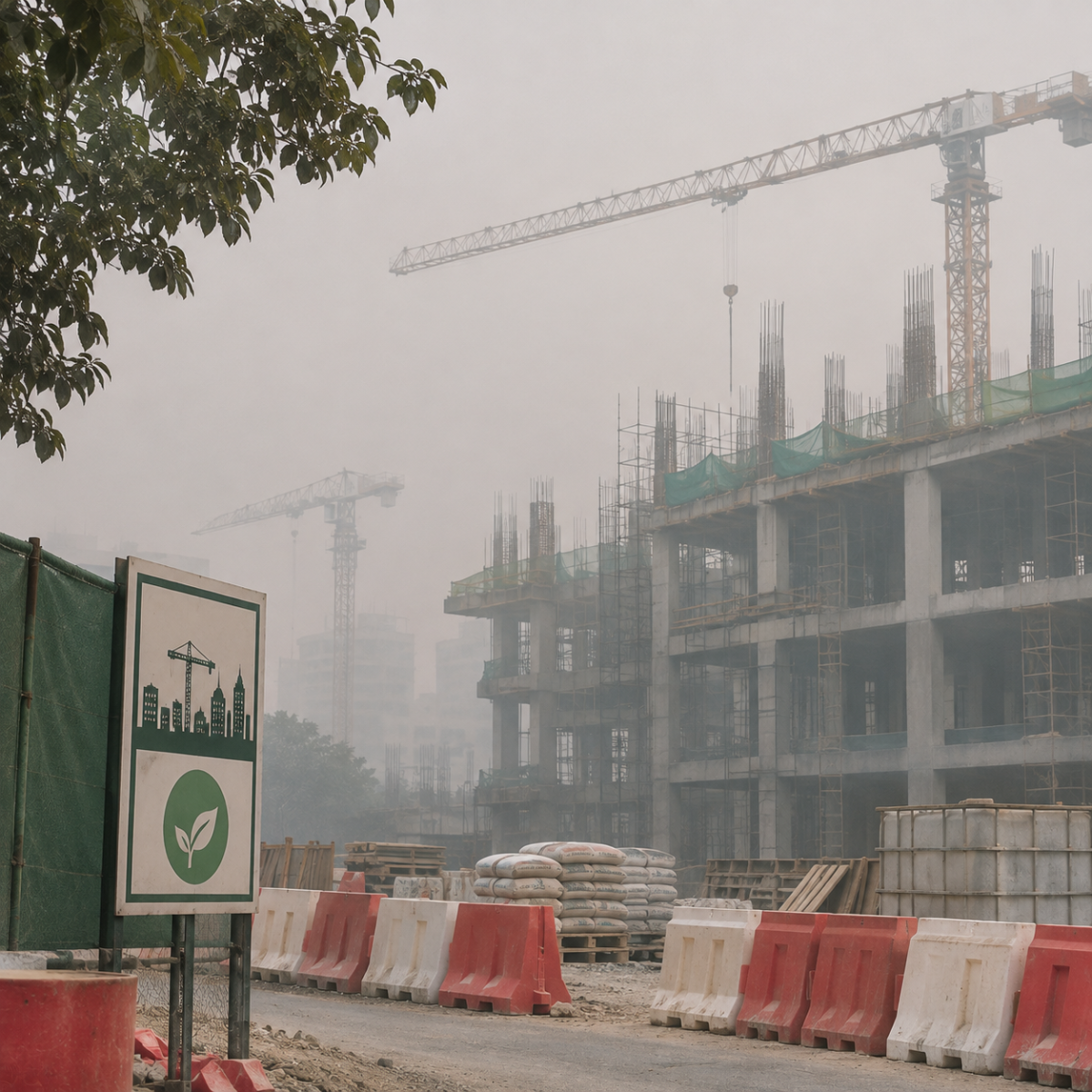
Construction activity comes to a standstill amid worsening air pollution.
Daily-Wage Workers: The Biggest Casualty
The most alarming aspect of this ban is the lakhs of daily-wage workers who lose their livelihood overnight.
Industry bodies and trade unions are asking whether the government has a strong and transparent system to support these families financially.
Contrary to claims on paper, accessing relief on the ground remains a tough ordeal for ordinary workers.
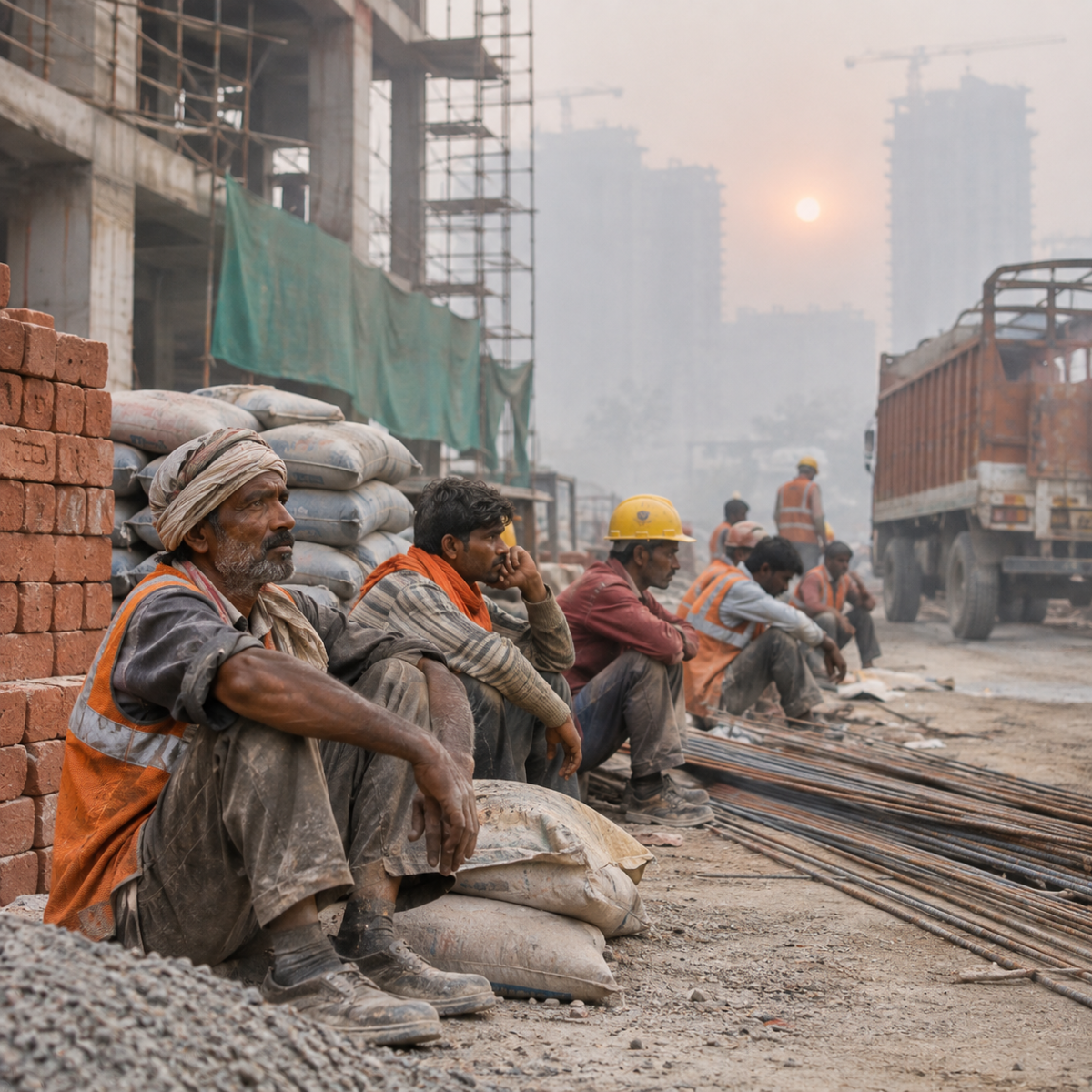
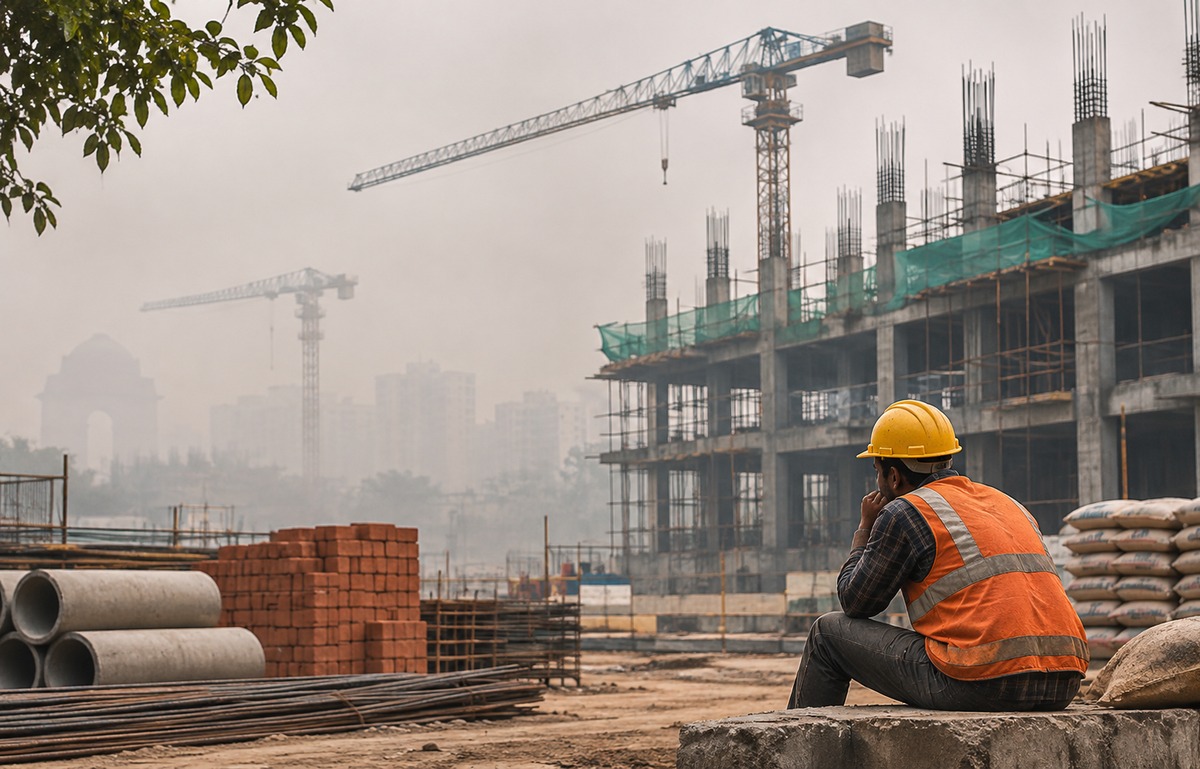
Daily-wage construction workers face livelihood uncertainty during restrictions.
Is the Construction & Demolition Sector the Easiest Scapegoat?
Industry and environmental experts allege that the construction and demolition sector is made the easiest scapegoat.
Instead of curbing road dust, unplanned urbanisation, delays in government infrastructure projects and political tussles with neighbouring states, a ban only on private and commercial construction is considered one-sided justice.
Many government mega-projects receive exemptions in the name of “national importance,” while heavy fines and sealing action hang over small and medium builders and vendors.
Conclusion
Until the government and administration frame reliable, transparent, year-round policies, such bans will keep being imposed every year.
The price of this yearly “reactive drama” and policy failure is always paid by the industry and the public.