
Uneven Vadodara: Ar. Shourya Patel & Ar. Dexter Fernandes on Massing & Detailing
- April 11, 2026
- By: Editorial Team
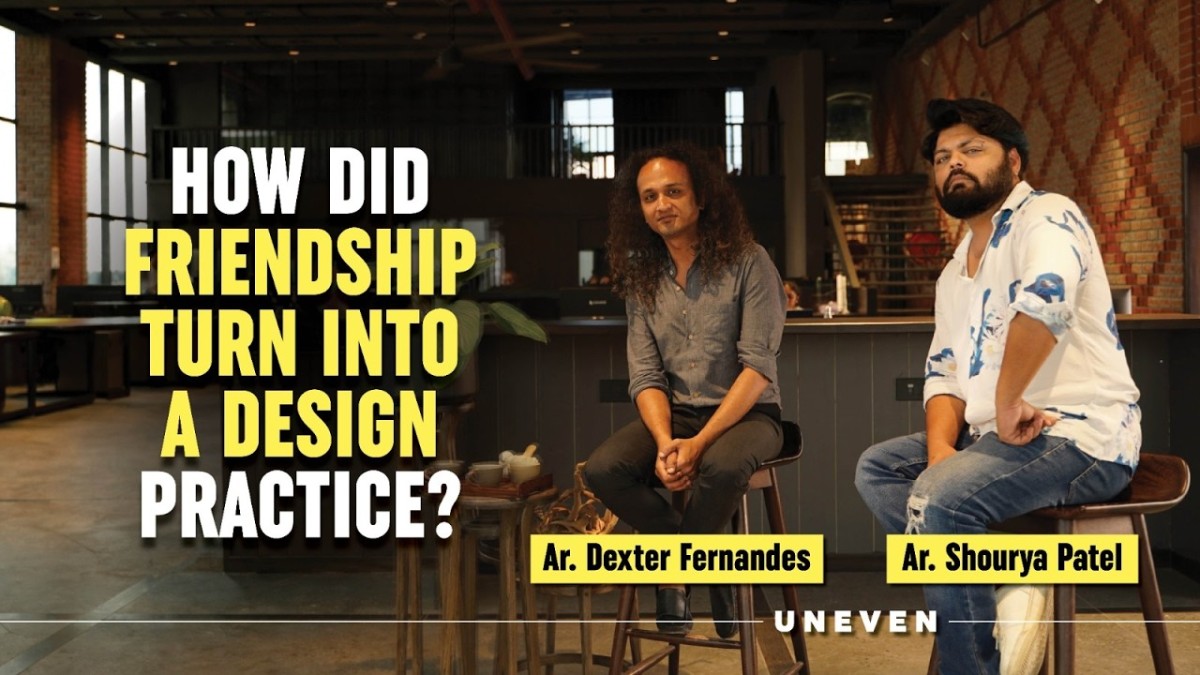
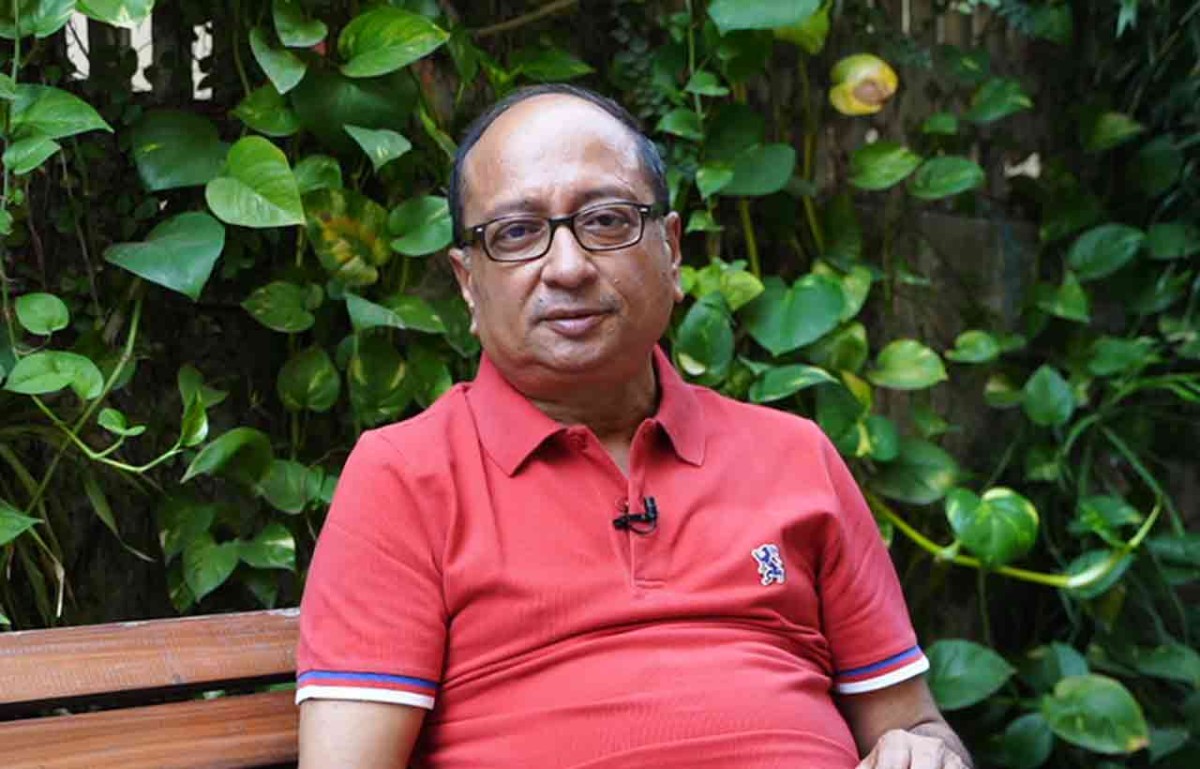
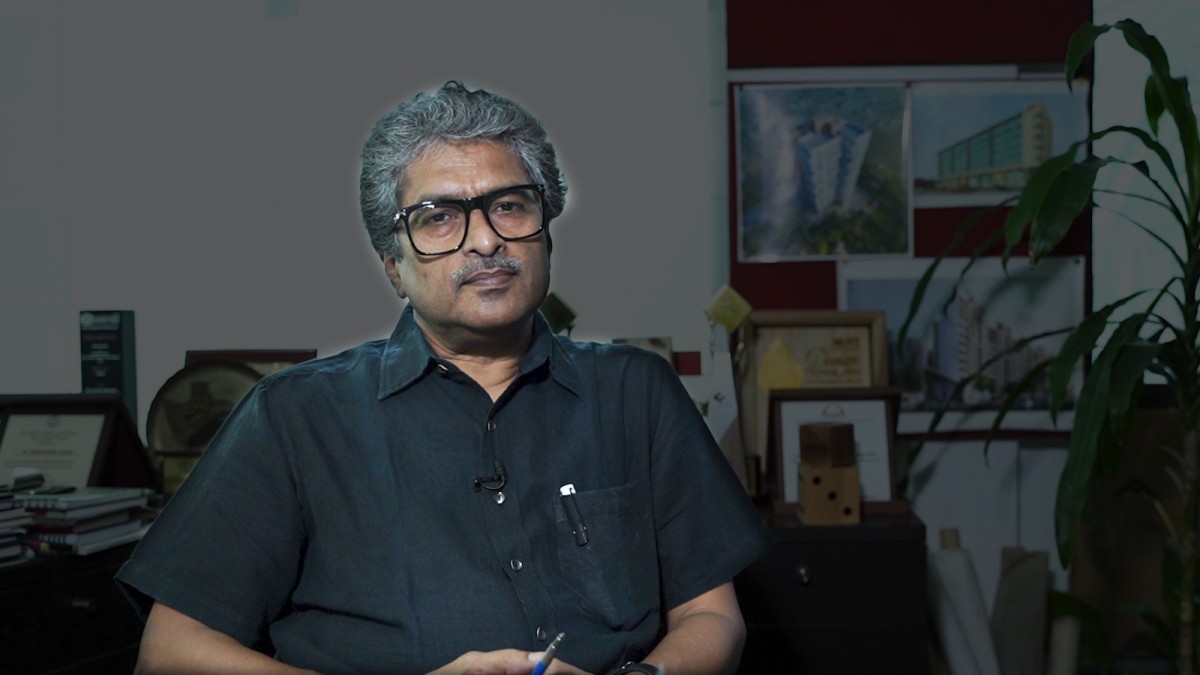
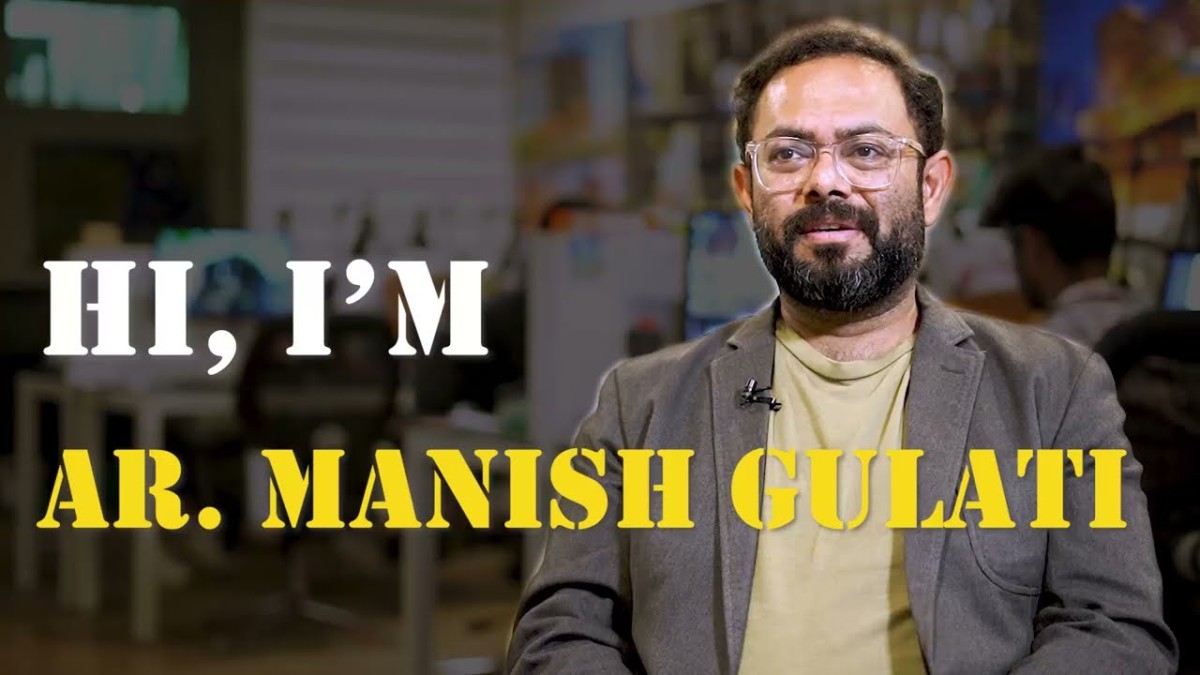
In this insightful conversation presented by Building Material Reporter, Ar. Shourya Patel and Ar. Dexter Fernandes, founders of Uneven, Vadodara, share the story behind their evolving design practice and the philosophy that defines their work.
What began as a simple college friendship gradually transformed into a professional partnership rooted in mutual understanding and complementary strengths. From working on small academic collaborations to setting up a modest two-room studio in Vadodara, their journey reflects the organic growth of a practice built on trust, clarity of roles, and shared creative vision. The name “Uneven” itself emerged spontaneously, later evolving into a concept that represents contrast, balance, and the idea that differences can create stronger design outcomes.
At the core of their philosophy lies a unique way of defining design—not as a separation between architecture and interiors, but through the lens of “massing and detailing.” For them, massing represents the larger spatial and volumetric decisions, while detailing addresses the finer nuances that shape user experience. This approach allows them to seamlessly design across scales—from large housing developments to the smallest graphical or spatial elements—ensuring consistency and coherence in every project.
The conversation also highlights how design is constantly evolving with time. Changing lifestyles, user expectations, and social influences continuously reshape architectural outcomes. The architects emphasize that there is no fixed style or signature language; instead, every project is a direct response to its context, user needs, and the time in which it is created. This adaptability is what keeps their work relevant and meaningful.
A significant part of their process is rooted in hand sketching and iteration. Despite the rapid advancement of digital tools, they strongly believe that creativity begins with the connection between the mind and hand. Sketching, doodling, and refining ideas manually remain central to their workflow, with technology acting only as a tool to enhance and execute those ideas rather than define them.
The discussion also touches upon the growing influence of social media on architecture and client expectations. With platforms offering endless visual references, clients often come with mixed inspirations, making the design process more complex. This has increased the need for deeper conversations, better communication, and a stronger role for architects in guiding clients toward practical and contextually appropriate solutions.
Another important aspect explored is the role of context, landscape, and materiality in shaping design. Whether it’s integrating natural elements, responding to local preferences, or experimenting with new materials, their approach remains grounded in creating spaces that feel intuitive and connected to their surroundings.
For young architects, the message is clear—there are no shortcuts in architecture. Real understanding comes with time, experience, and consistent effort. The initial years of practice are crucial for building a strong foundation in design thinking, execution, and problem-solving.
This conversation offers a refreshing and honest perspective on contemporary architectural practice in India—highlighting collaboration, adaptability, and the importance of staying true to the design process.